GrapheneOS: The Cypherpunk Operating System to Regain Your Digital Sovereignty
Discover why standard smartphones are trackers and how GrapheneOS, the ultimate hardened OS, reclaims your privacy in a SHTF scenario.
Discover why standard smartphones are trackers and how GrapheneOS, the ultimate hardened OS, reclaims your privacy in a SHTF scenario.

If you’ve read my breakdown of the EU’s Chat Control legislation, you already know the grim reality: End-to-End Encryption (E2EE) on mainstream apps is now officially useless. When the government forces your own smartphone to scan your files before encryption, standard OPSEC advice fails. I’ve tested dozens of so-called “secure” messengers in the field. Most … Read more
I’ve spent years analyzing threat models, testing off-grid communication setups, and locking down hardware. But nothing prepared the cybersecurity community for the sheer audacity of the European Union’s latest move. Under the moral guise of child protection, the EU has laid the groundwork for the ultimate mass surveillance tool: Chat Control. If you think your … Read more

In 1984, the society of Oceania is rigidly divided. The Inner Party holds absolute power, the Outer Party handles the bureaucracy under constant surveillance, and the Proles (the working class) are left largely to their own devices, kept docile by cheap entertainment and lotteries. When we look at China’s Social Credit System, we recognize this … Read more

In the novel 1984, the Party doesn’t just ban rebellious ideas: it destroys the words that make them possible. By shrinking the vocabulary through “Newspeak,” any heretical thought becomes conceptually impossible. Today, we no longer burn books in the public square. We simply derank them. Modern censorship has become silent, privatized, and automated. It’s called … Read more

We often think of George Orwell’s totalitarian nightmare as something foreign—a distant, grey dictatorship where citizens are forced into compliance. The truth is far more insidious: Oceania isn’t a state anymore; it has become a business model. And the worst part? We bought our own Telescreens, and we pay to keep them charged. The Voluntary … Read more

Starlink is compromised by corporate AI. Discover why the Iridium GO! satellite hotspot is the ultimate zero-trust communication tool for surviving the grid collapse.
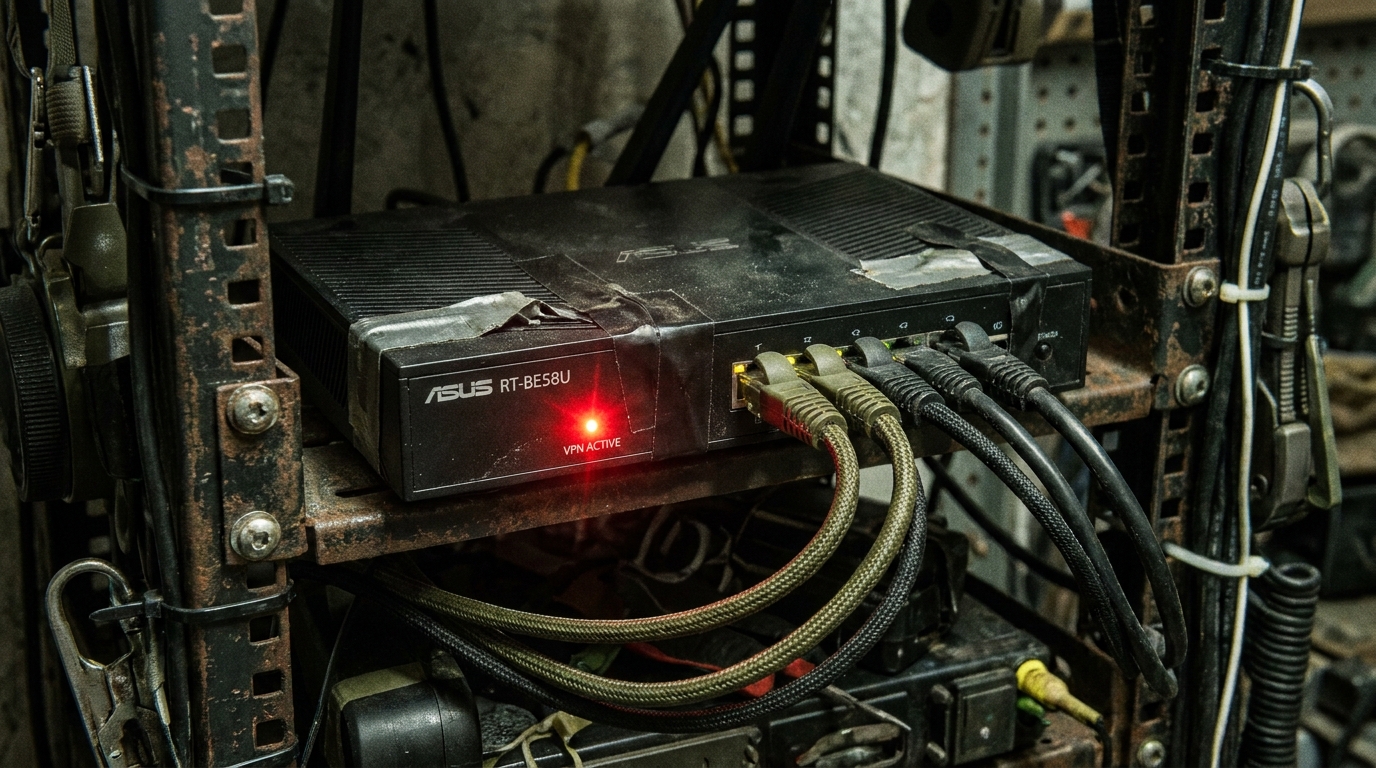
Stop your ISP from spying on you. Discover why the ASUS RT-BE58U is the ultimate router for privacy, VPNs, and building your off-grid digital perimeter.

Let’s clear something up right away: the “Cloud” does not exist. It is simply a sanitized marketing term for someone else’s computer—and most of the time, that computer belongs to Amazon, Google, or Microsoft. Building your digital life on Big Tech’s servers is like constructing a fortress on enemy territory. For those of us applying … Read more

The normalization of wearable surveillance is no longer a dystopian prediction; it’s walking down the street. Smartglasses, notably the Meta Ray-Ban collaboration, have brought high-definition, discreet recording capabilities to the masses. For anyone adhering to the Zero Trust philosophy—a mindset built on the premise of “never trust, always verify”—this development presents a profound challenge. How … Read more