The power grid is fragile. When the lights go out in an urban environment, the clock immediately starts ticking on your survival. If you or a vulnerable family member depends on temperature-sensitive insulin, antibiotics, or biologics, a blackout isn’t just an inconvenience—it is a lethal countdown. Maintaining the cold chain without mains electricity is one of the most critical aspects of physical OPSEC and disaster preparedness.
The Lethal Countdown When the Grid Collapses
Most households assume their kitchen refrigerator will keep things cold enough for a few days if they simply keep the door closed. In a rolling blackout, that might be true. In a prolonged grid-down scenario, it is a dangerous gamble.
Temperature-sensitive medications degrade rapidly when exposed to fluctuating temperatures. Once the internal temperature of a standard kitchen fridge rises above the safe threshold (usually between 36°F and 46°F, or 2°C to 8°C), the efficacy of the drugs can be permanently destroyed. You cannot rely on a centralized system to protect your life-saving supplies. You must build your own localized, resilient infrastructure to refrigerate medication during a power outage.
Tactical Cold Storage vs. The Noise Trap
The standard prepper advice is to buy a gas generator to keep the main refrigerator running. This is a critical tactical error.
In a quiet, blacked-out city, the roar of a thermal combustion engine is a dinner bell. It signals to everyone within a mile radius that you possess resources, fuel, and electricity. True resilience requires invisibility. Just as you need a stealthy setup when designing a gray man bug-out vehicle, your indoor medical cache must be utterly silent and undetectable from the street.
Gasoline also degrades, and fuel stations cannot pump gas without electricity. Relying on a consumable, highly flammable resource to protect your health is a broken strategy.
Building a Silent Medical Power Grid
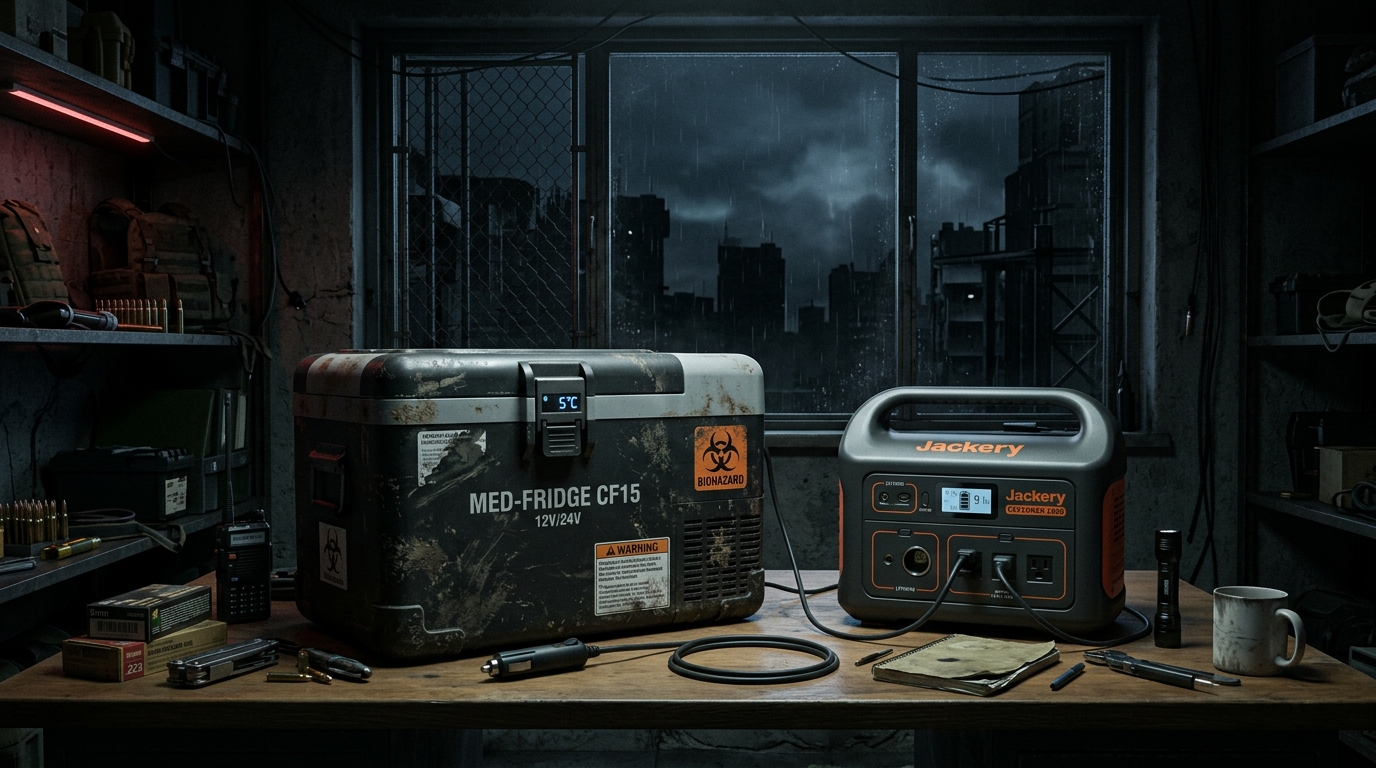
To successfully refrigerate medication during a power outage without compromising your physical security, you need a decentralized, closed-loop system. The ultimate setup consists of two components: a dedicated 12V compressor cooler and a silent solar power station.
Instead of trying to power a massive, inefficient kitchen appliance, transfer your essential medications to a specialized 12V portable refrigerator. These units draw incredibly low wattage once they reach their target temperature.
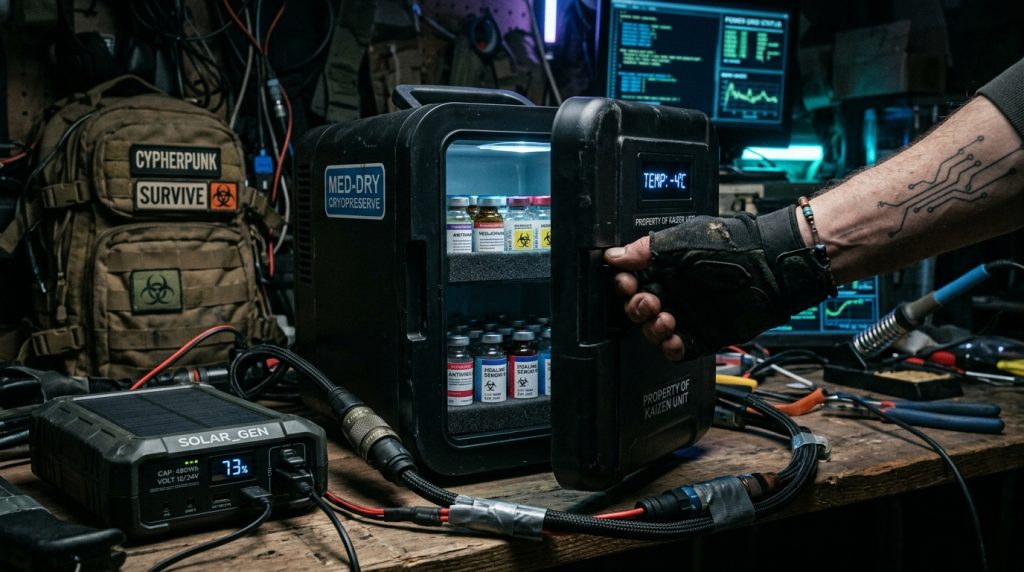
To power this micro-fridge, you deploy a portable lithium power station, such as a Jackery Explorer. Because these units emit zero noise and zero toxic exhaust, they can be operated safely inside a sealed, fortified apartment bedroom. During the day, you can deploy foldable solar panels on a balcony to recharge the power station, ensuring an infinite, silent loop of electricity to keep your medical supplies perfectly chilled.
The Arsenal: Read our full review of Jackery Power Stations for Urban Survival
FAQ: Securing Medical Supplies Off-Grid
How long can a solar generator run a medical fridge?
It depends on the battery capacity of the generator and the efficiency of the fridge. A mid-sized portable power station (around 1000Wh) can easily power a high-efficiency 12V compressor fridge for 48 to 72 hours without any solar input. With daily solar recharging, the system can run indefinitely.
Can I use ice packs instead of a solar generator?
Ice packs are a temporary bandage, not a survival strategy. They melt within 24 hours and introduce moisture, which can damage medication packaging. They also lack precise temperature control, meaning they can accidentally freeze your medication, which destroys insulin just as quickly as heat.
Are portable power stations safe to use indoors?
Yes. Unlike gas generators that produce lethal carbon monoxide, lithium-based solar power stations emit zero fumes and zero noise, making them the only viable option for apartment dwellers looking to refrigerate medication during a power outage securely.
Securing Your Medical Supply Chain
Outsourcing your survival to a fragile, centralized power grid is the opposite of a Zero Trust mindset. You must assume the infrastructure will fail, and you must have a silent, localized fallback ready to deploy at a moment’s notice.
By pairing a dedicated 12V portable fridge with a reliable, solar-rechargeable power station, you remove the anxiety of a blackout. You secure your medical supply chain, you maintain your operational security through silence, and you ensure that your most critical health assets remain viable no matter what happens outside your fortified walls.
In my cypherpunk thriller, The Dawn of Resilience, Ethan doesn’t just fight surveillance algorithms; he fights the brutal physical reality of a collapsed grid where basic medical preservation becomes a tactical operation. Discover the blueprint for off-grid survival and digital sovereignty.