The modern power grid is crumbling under the weight of extreme weather and peak demand. Instead of a complete collapse, many cities are experiencing scheduled, rotating power failures. While these outages are temporary, they occur with zero warning, threatening your perishable food and cutting off your access to critical information. Rolling blackouts preparation is no longer an extreme prepper concept; it is a basic necessity for anyone living in a major metropolitan area.
The Anatomy of an Urban Grid Failure
Understanding the threat is the first step in rolling blackouts preparation. Grid operators utilize these rotating outages to prevent a complete system crash. However, what is presented as a “two-hour interruption” can easily stretch into an eight-hour nightmare if the infrastructure fails to stabilize.
Why Your Fridge is the Ticking Clock
During a power loss, your refrigerator becomes a ticking time bomb. Every hour the compressor is off, the internal temperature rises, accelerating the growth of dangerous bacteria on your expensive groceries. In an urban environment, losing a week’s worth of food isn’t just an inconvenience—it’s a massive financial hit and a nutritional risk during a crisis.
Essential Rolling Blackouts Preparation
To survive these intermittent outages, you need a bridging solution. You need a power source that can keep your appliances running until the grid comes back online, and then rapidly recharge before the next blackout hits.

Keeping Comms Alive
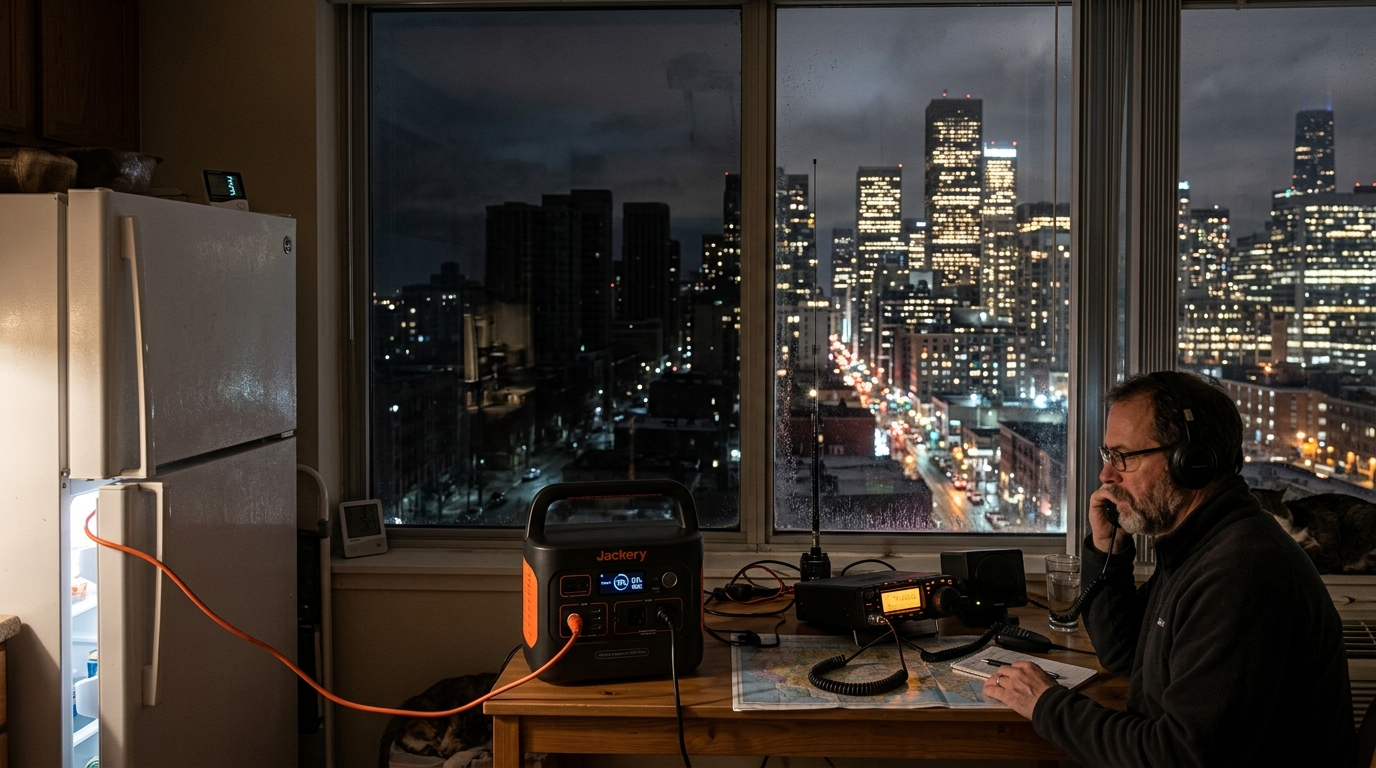
Beyond food, information is your most valuable asset. When the power goes down, cell towers often become congested or lose their own battery backups. Proper rolling blackouts preparation means keeping your Wi-Fi router, smartphones, and emergency ham radios fully powered so you can monitor local alerts and communicate with family.
The Solar Bridge Strategy
A high-capacity portable solar generator is the ultimate tool for rolling blackouts preparation. You can keep it plugged into your wall outlet. When the grid drops, it instantly takes over, keeping your fridge humming and your router broadcasting. When the power returns, it recharges via the grid, resetting the clock for the next outage. This seamless transition is vital for true apartment blackout survival.
Don’t wait until the food in your freezer starts to thaw to figure out your backup power strategy. Equip your apartment with a system designed for urban resilience.
Read our full Jackery Review: The Essential Power Station for Urban Survival
FAQ: Rolling Blackouts Preparation
How do I prepare my fridge for rolling blackouts?
Keep your fridge and freezer as full as possible (use water bottles if necessary) to retain thermal mass. Limit opening the doors, and use a portable power station to run the compressor periodically.
Can a solar generator run a refrigerator?
Yes. For effective rolling blackouts preparation, a power station with at least 1000W output and 1000Wh capacity can comfortably run a standard energy-efficient fridge for several hours.
How do I keep my internet working during a blackout?
Connect your modem and router to a portable power station. As long as your ISP’s local node has backup power, you will maintain your internet connection.
The grid is fragile, but your mind doesn’t have to be. Hardware can only get you so far when the system starts to break down. You need to understand the larger game being played.