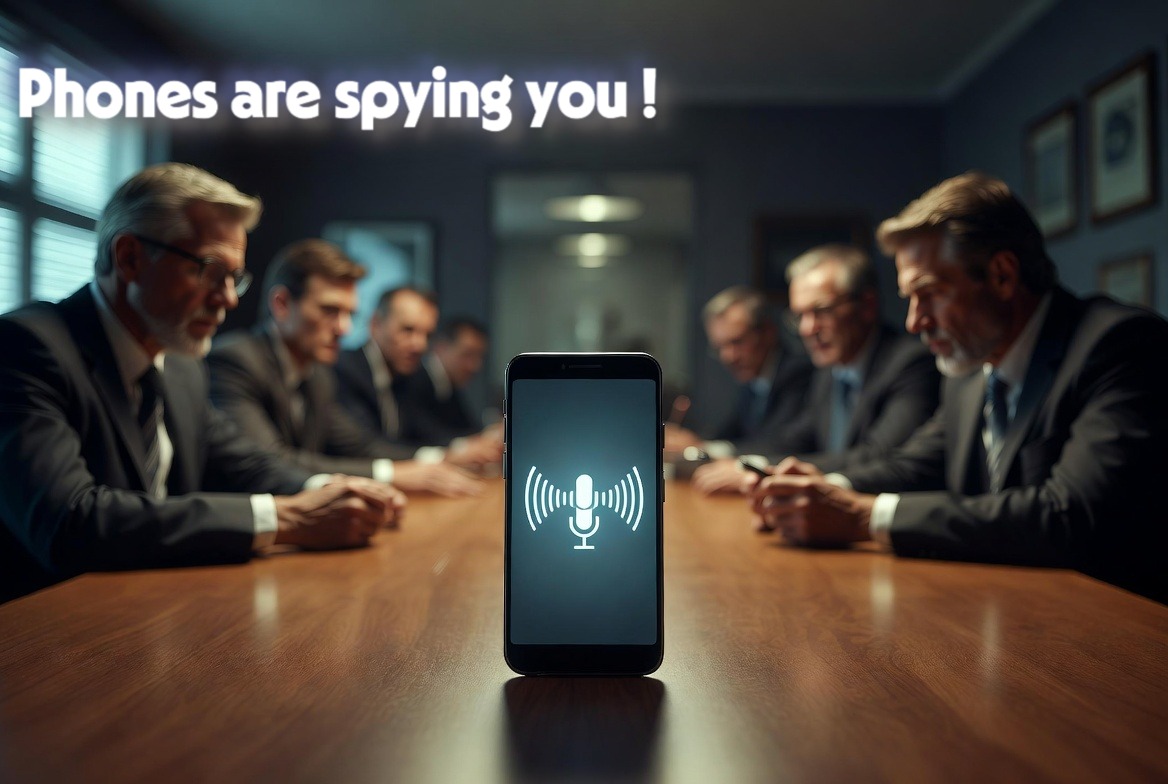
In the modern corporate world, the most dangerous spy in the boardroom is not a disguised competitor or a compromised employee. It is the sleek, indispensable device sitting face-up on the mahogany table: the smartphone.
High-stakes meetings—involving mergers and acquisitions, proprietary R&D discussions, or sensitive legal strategies—are prime targets for corporate espionage. Yet, executives routinely bring active, internet-connected microphones and cameras directly into these highly confidential environments.
While cybersecurity budgets soar to protect cloud infrastructure, physical operational security (OpSec) is dangerously neglected. In this article, we will expose the severe vulnerability of “hot mics” and outline the ultimate physical protocol for corporate espionage prevention to ensure your boardroom remains a Zero Trust sanctuary.
The Threat in Your Pocket: Hot Mics and Spyware
To understand the severity of the threat, you must understand how easily consumer technology can be weaponized. Your smartphone is designed to constantly listen for wake words like “Hey Siri” or “Ok Google.” The hardware is already optimized for persistent audio monitoring.
Sophisticated malicious software, such as the infamous Pegasus spyware, can exploit this capability. These are not tools limited to state-sponsored actors; the commercial market for corporate espionage tools is vast. What is most terrifying is the rise of “zero-click” exploits. These attacks can compromise a target’s phone without the user ever clicking a malicious link, opening a corrupted file, or making a mistake. The device is simply pinged remotely, and the operating system is silently subverted.
Once compromised, the smartphone becomes a “hot mic.” An attacker can remotely activate the microphone or camera, recording or live-streaming the audio of your boardroom discussions. The illusion of safety is pervasive: many executives believe that if their phone is locked and the screen is dark, it is inactive. This is false. A deeply compromised phone can simulate a powered-off state while secretly recording and transmitting gigabytes of corporate intelligence.
Why “Phones on the Table” is a Severe Liability
The physical presence of smartphones during a confidential meeting is a glaring liability. Relying on software solutions to mitigate a hardware problem is a fundamental error in corporate espionage prevention.
Consider the common practices: executives might put their phones on silent, activate “Do Not Disturb,” or even use the operating system’s settings to revoke microphone access for certain apps. None of these measures stop a sophisticated exploit. They are user-interface controls, not hardware overrides. Even “Airplane Mode,” as we have discussed in the context of client data protection, is merely a software setting that can be bypassed by malware designed to exfiltrate data silently.
Furthermore, leaving phones on the table creates a psychological distraction. It signals that the individuals in the room are not fully present and that external interruptions are prioritized over the confidential discussion at hand. True security requires eliminating both the technical vulnerability and the behavioral distraction.
The Zero Trust Boardroom: Physical Mitigation
Corporate espionage prevention requires moving beyond software settings and implementing undeniable physical boundaries. The standard for any high-level confidential meeting must be a “Zero Trust Boardroom.”
The implementation is straightforward but requires strict adherence: no unshielded electronics are permitted inside the meeting room.

The protocol involves setting up a secure drop station immediately outside the boardroom doors. Before entering, every participant—including the CEO and external partners—must place their smartphones, smartwatches, and tablets inside individual SLNT Faraday bags.
A military-grade Faraday bag provides total electromagnetic isolation. Once sealed, it is physically impossible for the device to connect to cellular towers, Wi-Fi networks, or Bluetooth receivers. Even if a smartphone is compromised with the most advanced zero-click spyware, it cannot transmit an audio stream out of the room, nor can it receive a remote command to activate its recording functions. The exfiltration vector is completely neutralized by the laws of physics.
🛡️ The Arsenal: Secure Your Corporate Secrets
The proprietary information discussed in your boardroom is worth millions. Do not allow it to be exfiltrated through a compromised 5G antenna. Enforce the Zero Trust standard with tactical, physical shielding.
👉 Discover our selection of premium SLNT Faraday Bags in The Arsenal
FAQ: Securing Confidential Meetings
Does a Faraday bag block audio recording completely?
No, and this is a crucial distinction. A Faraday bag blocks wireless signals, not sound waves. A physical microphone inside a compromised phone can still record audio locally if the malware was pre-programmed to do so. However, the Faraday bag prevents the phone from live-streaming that audio to an attacker or uploading the file to a remote server while the device is in the bag.
What is a “Zero-Click” exploit?
A zero-click exploit is a silent cyberattack that compromises a device without requiring any interaction from the user. You do not need to open an attachment or click a link. The attacker simply sends a specialized message or data packet that exploits a flaw in the operating system, instantly granting them remote control over the device’s functions, including the microphone.
How should executives manage phones during M&A meetings?
The absolute standard for corporate espionage prevention during Mergers & Acquisitions is strict physical segregation. All electronic devices must be powered down, sealed in SLNT Faraday bags, and kept in a separate, secure room entirely outside the auditory range of the boardroom.
In Conclusion
The sovereignty of your business depends entirely on the confidentiality of its strategic decisions. You cannot secure a boardroom with software alone. A true Zero Trust environment demands that the severe threat of smartphone espionage be neutralized physically. By establishing strict Faraday shielding protocols, you ensure that what is said in the room, stays in the room.
📚 Go Further: The Dawn of Resilience
Protecting your corporate secrets from espionage is essential for business survival. But are you prepared for a systemic breakdown that threatens your personal survival?
Discover what it takes to navigate a world without a safety net in The Dawn of Resilience.