The Death of Digital Privacy
Artificial Intelligence is no longer a novelty; it is the infrastructure of the new world. But as we rush to integrate AI into every aspect of our lives—from writing emails to analyzing our finances—we are walking into a massive surveillance trap.
When you type a query into a mainstream AI like ChatGPT, Claude, or Gemini, your thoughts, your business plans, and your personal struggles leave your device. They are sent to the servers of a multi-billion-dollar corporation.
For the average citizen, this is a privacy concern. For anyone serious about Digital Sovereignty or urban survival, it is a catastrophic Operational Security (OpSec) failure. You are willingly feeding the ultimate data-harvesting machine. This is exactly why running a local, air-gapped language model via Ollama has become mandatory for true privacy.
To navigate this new reality, you must understand the three paradigms of AI. Two of them are traps. Only one offers true sovereignty.

Paradigm 1: The Panopticon (OpenAI, Google)
This is the AI everyone uses. It is incredibly powerful, capable of reasoning through complex problems and generating code in seconds. But this power comes at the ultimate price.
- Total Surveillance: Every prompt you write is logged. If you ask an AI to summarize your financial documents or review your crypto survival strategy, that data is stored, analyzed, and potentially used to train future models.
- Censorship and Control: These models are heavily “aligned” by corporate ethics committees. They will refuse to answer questions they deem inappropriate, controversial, or contrary to the state narrative.
- The Grid-Down Weakness: Centralized AI requires a constant, high-speed internet connection. If the grid goes down, or if the corporation decides to ban your account, your “second brain” is instantly erased.
Paradigm 2: The Cypherpunk Network (Bittensor)
Recognizing the dangers of corporate monopolies, the crypto and Cypherpunk communities built an alternative: Decentralized AI. The flagship project of this movement is Bittensor (TAO).
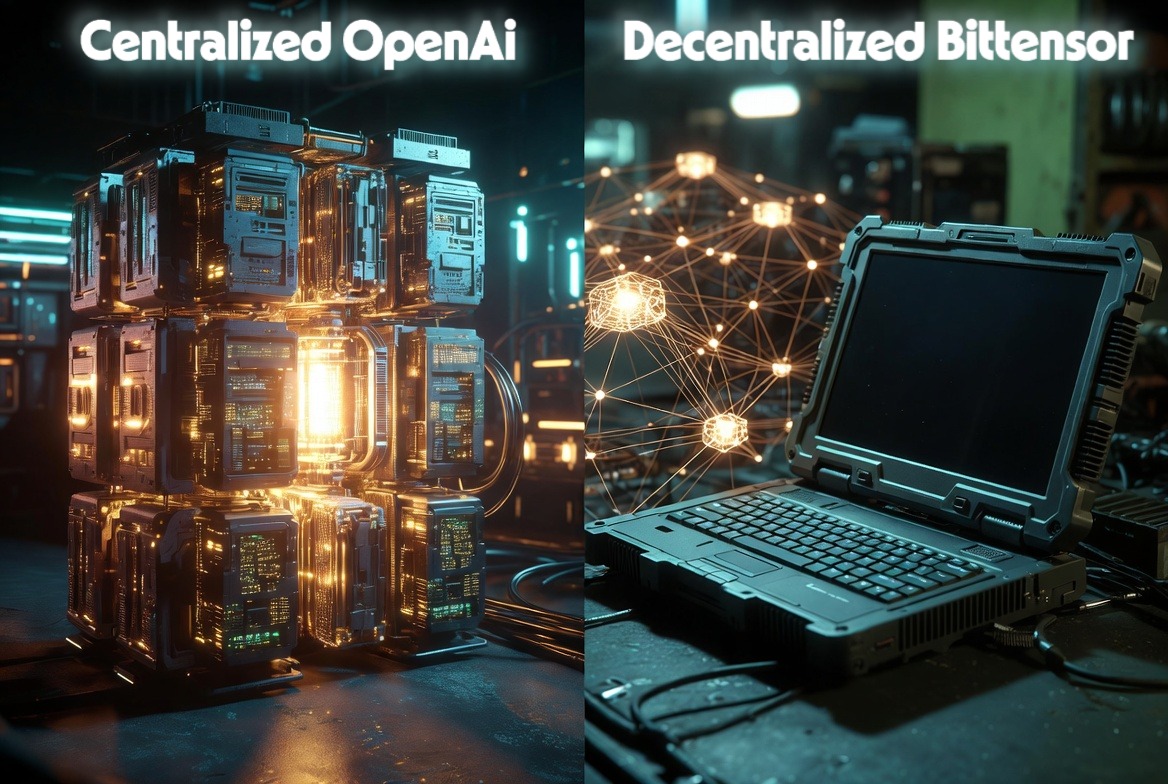
Bittensor is often described as the “Bitcoin of AI.” Instead of one corporation running a giant server, thousands of independent miners run AI models around the world, rewarded in cryptocurrency for providing good answers.
- Uncensorable: There is no CEO or ethics committee to block your queries. It is a bastion of free speech and open research.
- The OpSec Flaw: While Bittensor solves the censorship problem, it does not solve the privacy problem. When you submit a prompt to the Bittensor network, your data still leaves your computer. It is processed by a random miner somewhere in the world. You do not know who they are, and you do not know if they are logging your query.
- Still Grid-Dependent: Like OpenAI, you must be connected to the internet to access the decentralized network.
Bittensor is brilliant for public research, but it is a severe liability for analyzing your private data.
Paradigm 3: The Digital Bunker (Local Air-Gapped AI)
If you want the power of AI without sacrificing your sovereignty, there is only one viable path: running your own AI locally on your own hardware. This is the Air-Gapped AI paradigm.
Thanks to the rapid advancement of open-source models (like Llama 3 or Mistral) and quantization technology (which compresses massive models so they can run on standard computers), you no longer need a server farm. You can run an elite AI on a decent laptop.
The ultimate setup relies on a powerful combination: Ollama + OpenClaw.
- Ollama (The Brain): This software allows you to download and run powerful AI models entirely offline.
- OpenClaw (The Hands): This open-source agent framework connects the AI “brain” to your computer. It allows the AI to read your local files, execute terminal commands, and control your browser.
Why this is the ultimate survival tool:
- Absolute Privacy: Your data never leaves the room. You can ask your local AI to analyze your tax returns, audit your passwords, or review your SHTF preparation plans with zero risk of interception.
- Grid-Down Resilience: If the internet is severed or the power grid collapses, your AI continues to function. You retain access to an elite analytical tool while the rest of the world goes dark.
- True Ownership: No one can censor your local model. No one can revoke your access.

In the Field: “The Dawn of Resilience”
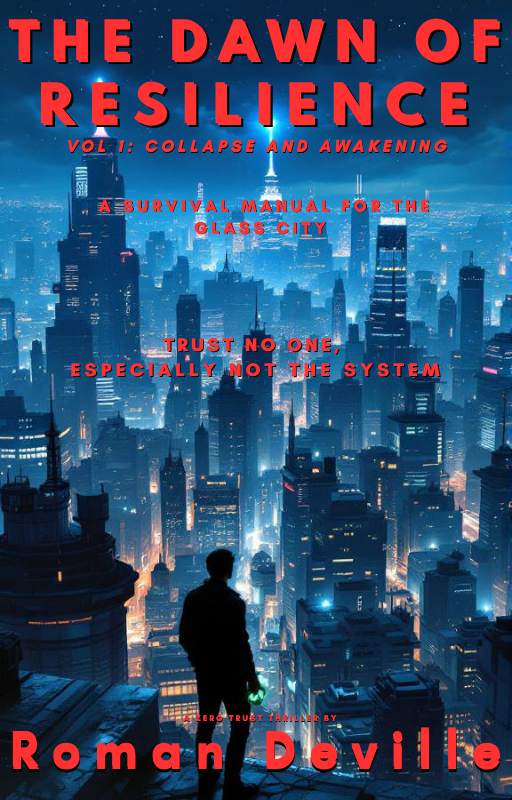
In the fight against digital authoritarianism, controlling your own intelligence is mandatory. In The Dawn of Resilience, the characters do not rely on corporate cloud servers.
When Ethan needs to analyze intercepted data or decrypt a secure message, he doesn’t ping a network controlled by the megacorps. He seals his tracked devices inside a Faraday sleeve, isolates his rugged laptop to sever all external connections, and spins up a local, air-gapped AI agent. It is the only way the Zero Trust Village can process complex information without triggering the city’s surveillance algorithms.
The Verdict: Reclaim Your Mind
The convenience of Cloud AI is a trap. Decentralized networks like Bittensor are a step in the right direction for freedom of information, but they fail the ultimate test of privacy.
True digital sovereignty requires building your own digital bunker. Setting up a local AI using tools like Ollama and OpenClaw is no longer just for developers; it is a fundamental requirement for anyone serious about OpSec in the 21st century. Your thoughts are yours. Keep them that way.
The Architecture of Trust: Verification and Open Source
The transition from Cloud AI to Local AI represents a fundamental shift in trust architecture. With a cloud provider like OpenAI or Google, the trust model is absolute and opaque: you must blindly trust that they aren’t reading your prompts, that they won’t alter the model’s logic tomorrow, and that their servers won’t be breached.
Local AI Flips this dynamic. By utilizing open-source models downloaded via Ollama, the community can inspect the weights and parameters. By wrapping that intelligence in an open-source agent framework like OpenClaw, security auditors can verify exactly what the agent is doing on your machine. You transition from “Trust the Corporation” to “Don’t Trust, Verify.”
Air-Gapped AI FAQ (People Also Ask)
Can I run an AI locally without the internet?
Yes. Once you have downloaded the initial model weights (using software like Ollama), the AI operates entirely offline. It does not require a cloud connection to reason, answer questions, or process data, making it the perfect tool for a grid-down or SHTF scenario.
What is the difference between OpenAI and Bittensor?
OpenAI is a centralized corporation that controls a closed-source model (like ChatGPT) hosted on its private servers, giving it total control over censorship and user data. Bittensor (TAO) is a decentralized network where thousands of independent miners run AI models; it prevents censorship, but queries still leave your device to be processed across the network.
Is local AI safe for private data?
Yes, running a local AI is the only way to guarantee absolute data privacy. Because the processing happens on your own hardware (the “Air-Gapped” paradigm), your sensitive files, financial documents, and personal communications are never transmitted over the internet to a third-party server.
What hardware do I need to run Ollama?
While massive cloud models require supercomputers, you can run capable, quantized local models (like Llama 3 8B or Mistral) on a modern consumer laptop. An Apple Silicon Mac (M1/M2/M3 with 16GB of Unified Memory) or a PC with a dedicated Nvidia GPU (8GB+ VRAM) provides an excellent, fast local AI experience.
Ready to go further?
Understanding the architecture of control is the first step. Surviving it is the next. To see how these concepts of digital sovereignty and off-grid intelligence play out in a collapsing society, dive into the world of The Dawn of Resilience.