The True Threat of an Urban Blackout
When we imagine a prolonged power outage, we usually think about the dark and the boredom. But the real ticking clock during a “Grid Down” scenario isn’t your Wi-Fi connection. It’s your food.
In an urban apartment, your emergency stockpile heavily relies on your refrigerator and freezer. In just 4 hours without power, meat becomes dangerous to consume. After 48 hours, your entire frozen reserve must be thrown away.
In the city, firing up a gas generator on your balcony is tactical suicide. The roar will attract the attention of every desperate neighbor, not to mention the deadly carbon monoxide fumes. You need a silent, self-sustaining solution.
The “Small Battery” Illusion
Many beginners buy a small portable battery (like a 300W power bank) thinking it will save their groceries. This is a fatal miscalculation.
Running a refrigerator isn’t just about its average power consumption. The real technical hurdle is called surge power (or peak power).
A standard refrigerator compressor requires a massive burst of energy for a few milliseconds just to start—sometimes up to 4 or 5 times its normal running wattage. If your battery cannot deliver this initial “slap” of energy, the fridge will never turn on, even if the battery is at 100% capacity.
The Formula: How Many Watts to Survive?
Here is the mathematical reality of urban energy survival:
- Running Watts: A modern refrigerator consumes between 100W and 200W while actively cooling.
- Surge Watts: The compressor demands between 800W and 1200W upon startup.
Therefore, you need a power station capable of handling at least 1000W to 1500W at peak.
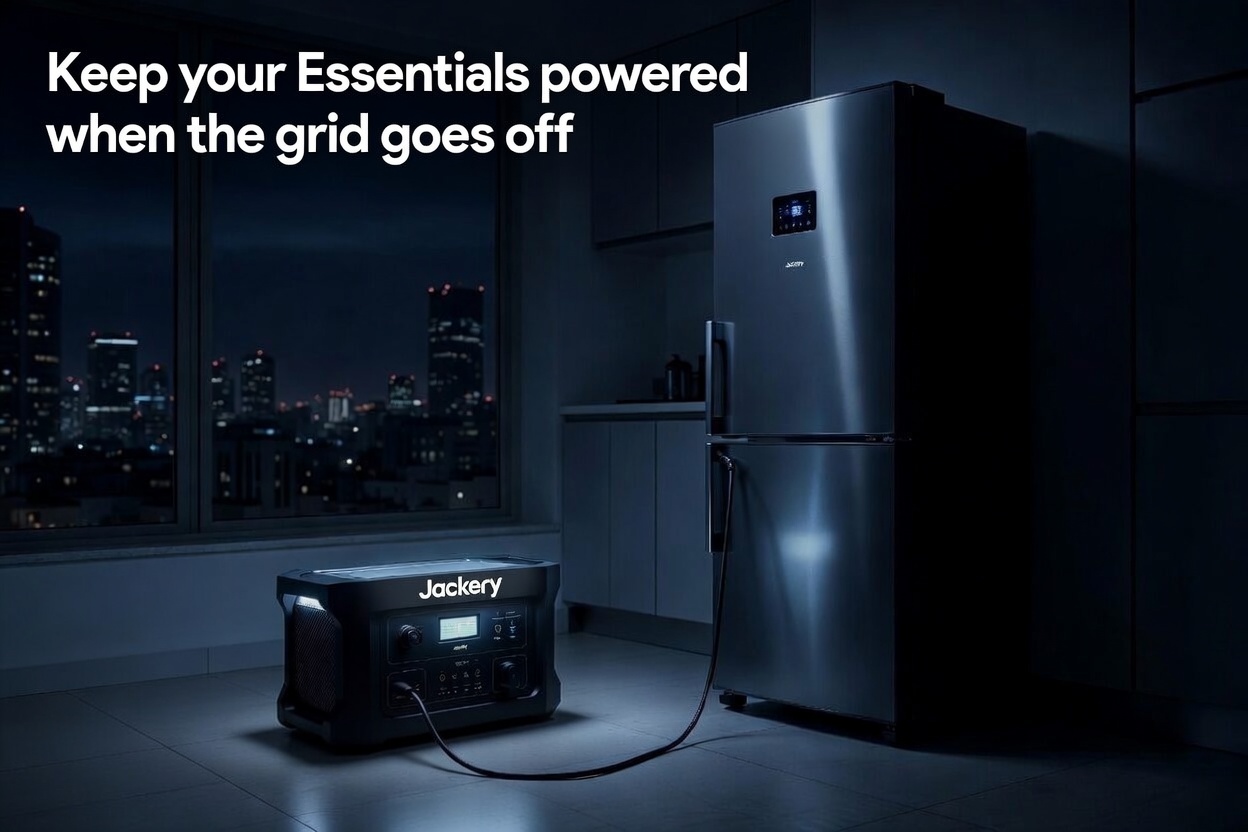
This is why, as we explained in our complete review of silent solar generators, entry-level models are insufficient. This is where stations like the Jackery Explorer 1000 (or higher) become vital investments. They offer 1000W of continuous power and, crucially, 2000W of surge power, which easily absorbs the startup jolt of any apartment refrigerator.

OpSec Strategy: The Cooling Cycle
Plugging your fridge into the battery 24/7 will drain your reserves unnecessarily. Energy OpSec (strict resource management) requires a different strategy: cycle cooling.
- Keep the door shut: A modern fridge keeps food cold for about 4 hours if unopened. A full freezer can last up to 48 hours.
- The 2-hour cycle: Plug your Jackery station into the fridge for 1 to 2 hours, allowing the compressor to bring the internal temperature back to optimal levels.
- Unplug and wait: Once the cold is restored, unplug the station. Wait 4 hours before repeating the process.
With this method, a mid-sized battery can keep your perishables safe for several days without being constantly drained.
Renewing Energy: Apartment Solar
What happens after 3 days of blackout? Your battery will be empty. That is the limit of pure storage.
True sovereignty is production. By pairing your power station with foldable solar panels (like the SolarSaga series), you transform a backup battery into an infinite generator.
Even from a balcony or behind a large apartment window, a few hours of direct sunlight can recharge the station while you manage your other urban survival priorities. The system is “Plug and Play”: you plug it in, it charges. Zero noise. Zero smoke. Zero signal to outside looters.
The Next Step in Your Preparation
Losing the power grid isn’t an abstract scenario; it is the breaking point where civil society collapses. Securing your food supply through silent, off-grid energy is just one piece of the resilience puzzle.
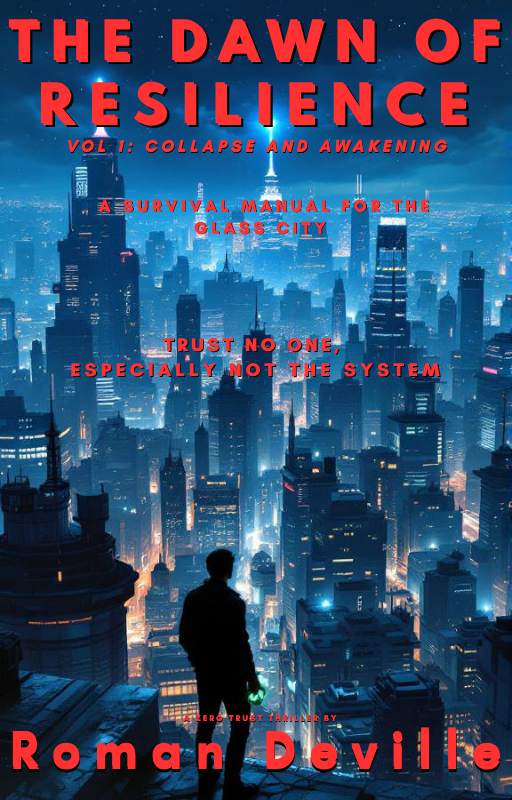
To discover how all survival tactics (energy, encrypted communications, physical defense) interlock during a systemic crisis, download the first chapter of the dystopian thriller The Dawn of Resilience. Learn the rules of the game before it stops.