The Off-Grid Fire Nightmare
When discussing LiFePO4 vs Lithium-Ion for urban survival, the number one rule is simple: the gear supposed to save your life must never become the cause of your demise.
During a major “Grid Down” collapse, emergency services are the first to be overwhelmed. If a fire breaks out in your 5th-floor apartment while phone lines are dead and firefighters are swamped, you are completely on your own. Your safe house becomes your tomb.
This is exactly what can happen if you store power indoors without understanding battery chemistry. Many “preppers” buy cheap portable power stations online without looking under the hood. They are literally bringing a ticking time bomb into their living room.
LiFePO4 vs Lithium-Ion: The Thermal Runaway Time Bomb
For years, the industry standard for electronics (smartphones, e-bikes, older solar generators) has been the classic Lithium-Ion battery (NMC or NCA).
The major flaw of these batteries is a phenomenon called “thermal runaway.” If the battery suffers physical trauma, overcharging, or a manufacturing defect, it begins to heat up uncontrollably.
The worst part? As it burns, NMC chemistry releases its own oxygen. This means a Lithium-Ion battery fire is almost impossible to extinguish with a standard fire extinguisher. It self-sustains and generates highly toxic gases. Storing the equivalent of 1000W of classic Lithium-Ion inside a closed apartment is a severe Operational Security (OpSec) failure.

The Survival Standard: LiFePO4 Technology
If you want to store energy safely right next to where you sleep, you must upgrade the chemistry. The new military and survivalist standard is LiFePO4 (Lithium Iron Phosphate, or LFP).
The chemical structure of LiFePO4 is fundamentally different and vastly more stable:
- Zero Fire Risk: LFP chemistry is extremely heat resistant. Even if the battery is punctured, crushed, or subjected to extreme temperatures, it will not ignite or explode. There is no thermal runaway.
- Massive Lifespan: A classic Lithium-Ion battery dies after about 500 to 800 charge cycles. A LiFePO4 battery can endure over 3000 to 4000 cycles before seeing a slight drop in capacity. Used daily, it will last over 10 years.
- Gas Safety: LiFePO4 does not release toxic gases, making it the only technology truly suited for confined spaces (bunkers, barricaded apartments).
The Arsenal: Choosing the Right Gear
This is why battery chemistry must be your absolute first purchasing criterion. A solar generator should be a shield, not a liability.
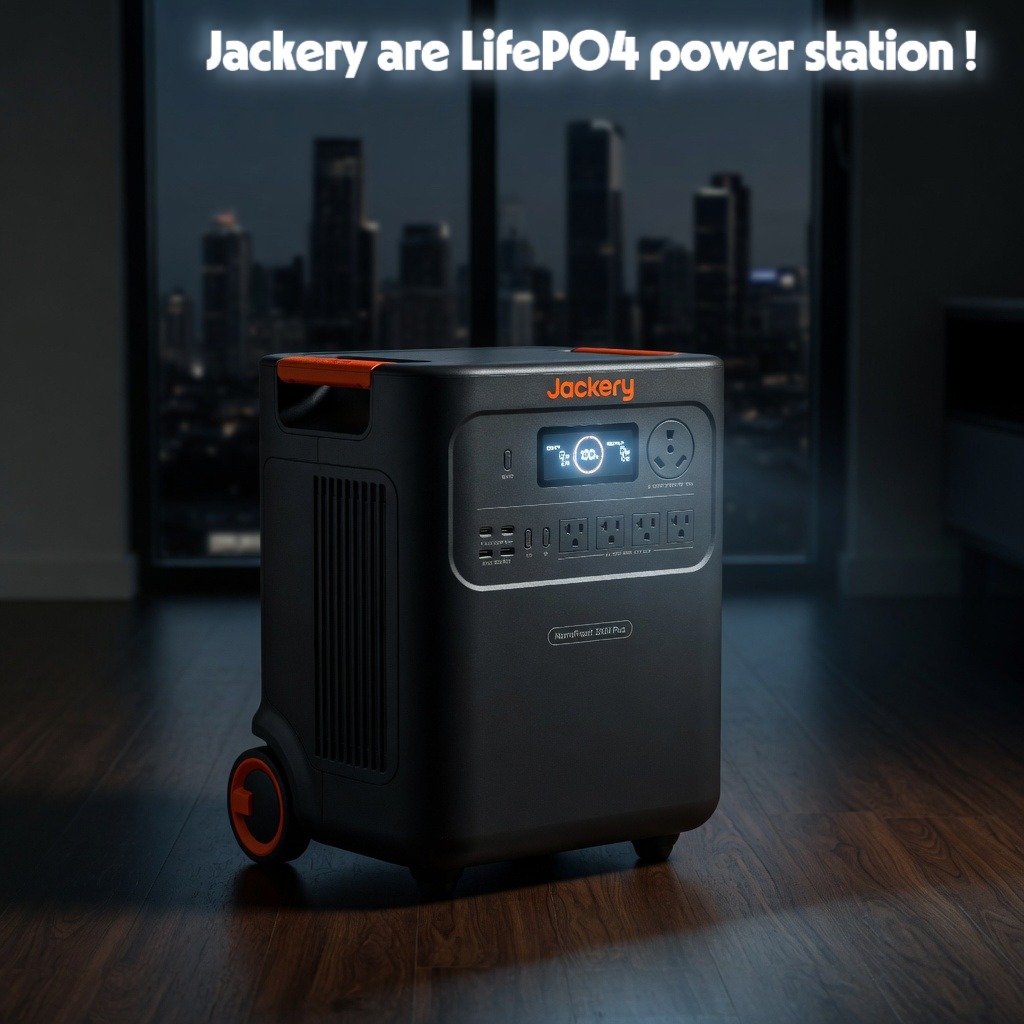
This is why, in our complete review of Jackery generators for urban survival, we exclusively recommend their product lines equipped with LiFePO4 batteries. Whether it’s to power a refrigerator, a communication router, or medical equipment during a crisis, this technology guarantees silent and completely safe indoor energy sovereignty.
In the Field: “The Dawn of Resilience”
In the world of The Dawn of Resilience, technological negligence is paid for with your life. Inside the Zero Trust Village, residents know that hoarding scavenged legacy batteries in confined spaces is an unacceptable risk during raids or prolonged blackouts.
Ethan meticulously selects his gear. His off-grid communication hub is powered by an LFP station hidden under his desk. Even if his apartment sustains physical damage from a drone strike, his power system won’t trigger a chemical fire that would destroy his shelter. OpSec is physical as much as it is digital.
Long-Tail FAQ: Your Battery Questions Answered
Is it safe to sleep next to a LiFePO4 power station?
Yes, absolutely. Unlike gas generators (which emit carbon monoxide) and older Lithium-Ion batteries (fire risk), LiFePO4 stations are perfectly safe for indoor use, even right next to your bed or inside an underground shelter.
Are LiFePO4 batteries heavier?
Yes. This is the only “drawback” of LiFePO4: its energy density is slightly lower than classic Lithium, making the batteries a bit heavier for the same capacity. However, for a “Bug In” scenario (surviving at home) or as a domestic power backup, the weight is irrelevant compared to the absolute gain in safety.
Can I leave my battery plugged in all the time?
With a modern Battery Management System (BMS) like those built into today’s high-end gear, overcharging is prevented electronically. However, for ideal SHTF preparation, it is recommended to charge the battery to about 80-90% and store it in a cool place, checking it every 6 months.
Ready to Master Your Environment?
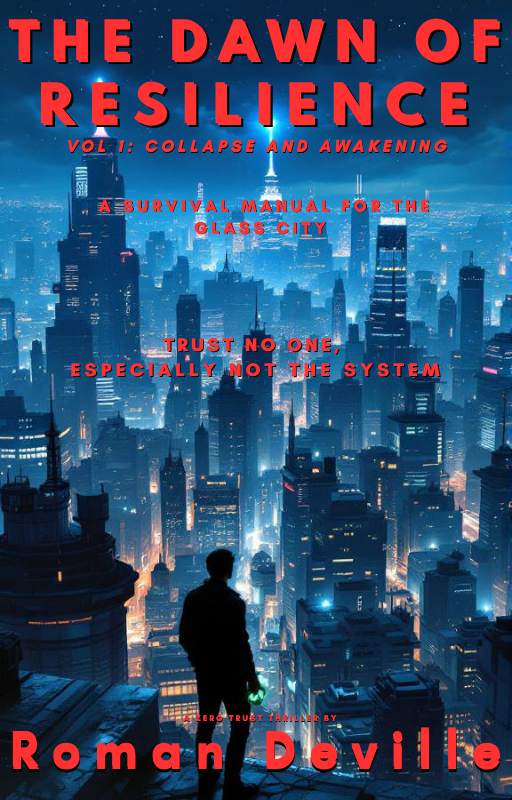
Energy independence is just one vector of your sovereignty. To understand the whole picture and discover how ordinary citizens organize to take back control of their lives in the face of technological collapse, dive into The Dawn of Resilience.
This novel is an anticipation and survival manual. Discover the strategies of the Zero Trust Village and equip your mind before you equip your apartment.