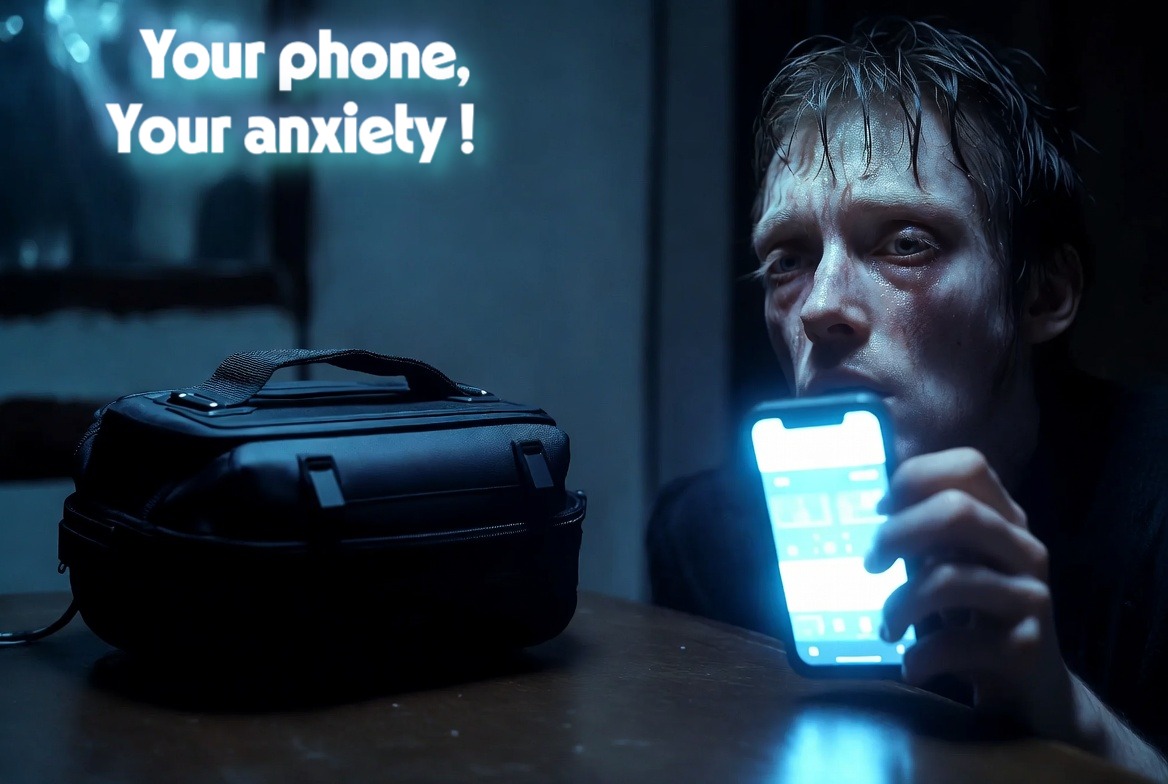
Welcome to the ultimate guide on surviving the psychological warfare of the modern digital age**. We spend countless hours talking about data privacy, encryption, securing our hardware from surveillance, and preparing for the physical collapse of the grid. But there is a more insidious, invisible threat that we face every single day: the devastating toll that constant connectivity takes on our mental health, our focus, and our nervous systems.
All the cryptographic security in the world cannot protect you from the engineered addiction of the applications running on your devices. Whether it comes from endless scrolling, relentless notifications, or the toxic societal expectation to be “always on,” your attention and your peace of mind are constantly being harvested. You are carrying a psychological slot machine in your pocket.
Here is how you break the cycle, cure the anxiety of hyper-connectivity, and implement a true, physical “Dark Mode” to reclaim your mind and your digital sovereignty.
The Anatomy of Digital Addiction and Chronic Stress
Many people believe that they are in control of their digital habits. They think they can just put the phone down whenever they want, or ignore the buzzing in their pocket. This is a dangerous illusion. Modern applications, social media platforms, and even basic email clients are meticulously designed by behavioral psychologists to keep you hooked. They exploit the fundamental vulnerabilities of the human brain.
There are two primary psychological threats you face every time you unlock your screen:
- 1- The Dopamine Trap: Every notification, every “like,” every breaking news alert, and every new email triggers a micro-release of dopamine in your brain. This is the exact same neurochemical pathway exploited by slot machines and addictive substances. Over time, your brain builds a tolerance. You need more notifications, more scrolling, and more engagement just to feel normal. When you are disconnected, you experience genuine withdrawal symptoms, manifesting as restlessness, irritability, and an overwhelming urge to check your device.
- 2- The Cortisol Spike: Conversely, the phone is also a relentless source of stress. The expectation of immediate replies from your boss, the flood of negative geopolitical news, and the phantom vibration syndrome all trigger the release of cortisol, the body’s primary stress hormone. Being “always on” means your nervous system is trapped in a perpetual digital anxiety loop, keeping you in a state of low-grade fight-or-flight. You never truly rest, and your adrenal system is constantly taxed.
True peace of mind requires a physical barrier, not just a software toggle or a fleeting burst of willpower.
The Myth of Software “Do Not Disturb”
Tech giants are fully aware of the public backlash against screen time and digital fatigue. Their solution? Software features like “Do Not Disturb,” “Focus Mode,” or “Airplane Mode.” While these tools are marginally better than nothing, they are fundamentally flawed.
Why? Because the barrier to re-entry is zero. It takes less than half a second to swipe down and disable Airplane Mode. It takes one tap to bypass a screen time limit. Your brain knows the connection is just a millimeter of glass away. The psychological tether is never truly severed. You are still anticipating the messages, emails, and alerts that are being silently queued up in the background.
Furthermore, as we established in our guide on Taking Back Control and Digital Sovereignty, your phone is still performing background tracking and emitting signals even when these software modes are active. The device is still “alive,” and subconsciously, your brain knows it.
The Sleep Crisis: Why Your Bedroom Must Be a Zero-Trust Zone
One of the most devastating hidden costs of constant connectivity is its profound impact on our sleep architecture. The blue light emitted by screens suppresses melatonin production, but the damage goes much deeper than just light exposure before bed.
When you sleep with your phone on your nightstand, your brain remains in a state of hyper-vigilance. You are subconsciously waiting for the next vibration or emergency alert. Furthermore, the constant emission of electromagnetic fields (EMF) and RF signals (Wi-Fi, cellular data) from a device sitting inches away from your brain has been linked by numerous independent researchers to fragmented sleep patterns and a reduction in deep, restorative REM sleep.
By utilizing a Faraday bag as your physical dark mode at night, you transform your bedroom into an off-grid sanctuary. You cut off the EMF radiation, you eliminate the possibility of a 3 AM notification waking you up, and you sever the psychological cord to the stressful outside world. The result is deeper, more restorative sleep, which is the foundational pillar of both mental health and physical resilience.
The Physical “Dark Mode”: Your Mind’s Only Defense
If you want to achieve deep focus, enjoy a genuinely restful night of sleep, or be entirely present with your family without the creeping anxiety of the digital world, you must physically shield your devices.
The only proven defense against the psychological pull of the smartphone is introducing absolute physical friction. This is where the concept of a physical “Dark Mode” comes in.
By placing your smartphone inside a military-grade Faraday cage, you are not just blocking signals; you are drawing a hard, physical boundary between yourself and the digital grid. Out of sight, out of mind, and completely off the network.
The Essential Hardware Protocol for Mental Health:
You must identify the hours of your day that require absolute peace—typically the hour before bed, during deep work sessions, or during family dinners. During these crucial windows, your phone must go into a Faraday bag.
When the phone is sealed inside, it is dead to the world. It cannot receive data, it cannot ring, it cannot track you, and it cannot tempt you. The psychological relief is immediate. Your brain finally registers that checking the phone is impossible, and the compulsive urge to scroll dissipates.
To build this physical boundary, you need reliable, high-quality gear that guarantees complete signal isolation. Discover the best tools to implement your physical dark mode on our Ultimate SLNT Faraday Bag Arsenal (our top-rated money page for military-grade protection).

These bags completely block cellular (4G, 5G), GPS, RFID, NFC, and Wi-Fi signals. When your phone is inside, it is physically impossible for the digital world to intrude on your physical reality. It is the ultimate form of mental and digital liberation.
Frequently Asked Questions (FAQ)
Does a physical dark mode actually reduce anxiety?
Yes. Studies have shown that the mere physical presence of a smartphone on a desk reduces cognitive capacity and increases anxiety, even if the phone is turned off. By placing the phone in a Faraday bag and moving it out of the room, you eliminate the visual cue and the subconscious anticipation, allowing your nervous system to finally down-regulate and relax.
Can’t I just turn my phone off completely?
While turning your phone off is a good step, modern smartphones are incredibly fast to reboot. The psychological barrier is too low. Furthermore, many modern devices retain some baseband connectivity or location broadcasting (like Bluetooth beacons) even when powered down to facilitate “find my phone” features. A Faraday bag ensures 100% isolation, providing absolute peace of mind.
How long should I keep my phone in the Faraday bag?
Start small to build the habit. Begin with “Faraday Dinners”—sealing the phone away for one hour while eating. Then, graduate to sealing the phone away one hour before you go to sleep, leaving it in the bag until after your morning routine. This prevents the toxic habit of doom-scrolling in bed and dramatically improves your quality of life.
Will I miss emergencies if my phone is in a Faraday bag?
This is the most common fear used to justify digital addiction. To mitigate this, establish an alternative, analog method for true emergencies, such as a cheap, pre-paid “dumb phone” or a landline that only a select few family members have the number for. Keep that emergency phone outside the bag. You will quickly realize that 99.9% of modern notifications are not actual emergencies.
The Dawn of Digital Rebellion
Taking back control of your attention is not paranoia; it is the ultimate expression of taking responsibility for your own sovereignty. When the system is designed to harvest your time and monetize your anxiety, the centralized tech giants will inevitably drain your most valuable resource: your focus. When the crisis hits, or simply when life demands your full presence, you will be entirely dependent on the mental clarity you protected and the boundaries you enforced.
This transition from total grid reliance and constant stimulation to off-grid survival and mental clarity is a core theme in my technothriller, The Dawn of Resilience. Ethan and Aura didn’t survive the collapse of the city because they were lucky; they survived because they built a shielded, decentralized infrastructure—both physically and mentally—before the lights went out.
Are you ready to disconnect from the fragile system and learn how to survive?