A now-former DeKalb County sheriff’s deputy is facing charges for misusing Flock Safety cameras to conduct unauthorized tracking. If this shocks you, you haven’t been paying attention. This isn’t a bug in the system; it is the fundamental, inevitable feature of centralized surveillance architectures.
We spent the last decade fighting the digital surveillance of Big Tech, pushing movements like #DeGoogle and #DeMeta to protect our data. But while we were securing our browsers and adopting a digital Gray Man theory, a privately-owned, physical dragnet was quietly being built right outside our front doors. Welcome to the era of #DeFlock, and the privatization of mass surveillance.
The Illusion of Local Security
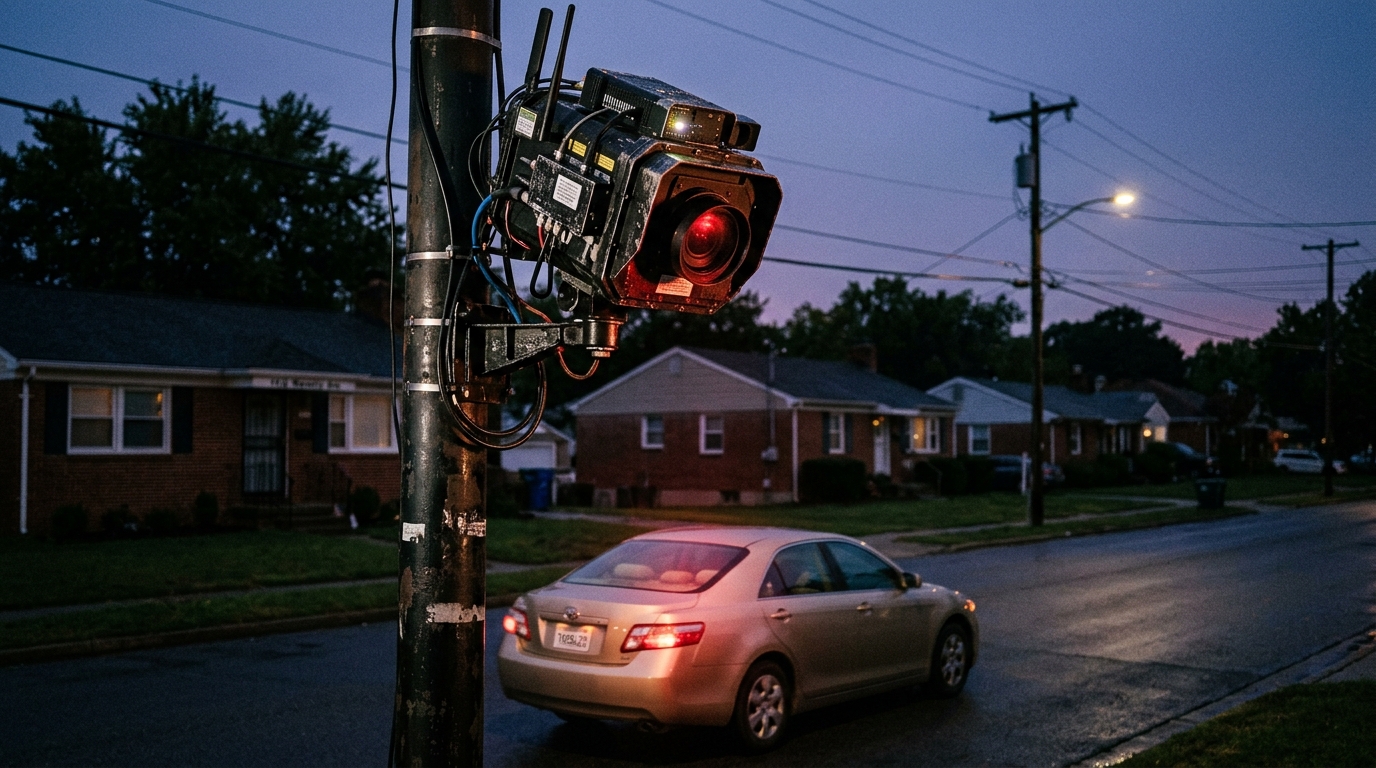
Flock Safety doesn’t just sell security cameras; they sell an Automated License Plate Reader (ALPR) network as a Software-as-a-Service (SaaS). Today, there are roughly 100,000 of these cameras blanketing the United States, representing over 80% of the ALPR market.
The genius—and the terror—of Flock is their business model. They didn’t just sell to police departments. They bypassed traditional government oversight by selling directly to Homeowner Associations (HOAs), private businesses, and affluent neighborhoods. They convinced your neighbors to pay a monthly subscription to surveil you, and then they piped all that data into a centralized cloud honeypot accessible by thousands of law enforcement agencies nationwide.
When you massify physical movement data into a single, searchable database, abuse isn’t a possibility; it’s a mathematical certainty. The DeKalb County incident is just the tip of the iceberg. Stalking, political profiling, and unauthorized tracking are the natural byproducts of giving thousands of individuals a search engine for real-world physical coordinates.
The Eyes and the Brain: Flock Safety Meets Palantir
If Flock Safety provides the optic nerves of this new surveillance state, companies like Palantir provide the visual cortex.
ALPRs alone are just data points: a license plate, a timestamp, a GPS coordinate. But when fed into advanced analytical engines and predictive policing algorithms, this data is cross-referenced with your entire digital footprint. Your public records, your social media activity, your credit data, and your vehicle’s physical movements are fused together in real-time.
This is exactly where the traditional concept of the “Gray Man” dies. In the old days, being a Gray Man meant driving a boring beige car, wearing neutral colors, and not drawing human attention. Today, your beige Honda Civic is pinged by a Flock camera at an intersection, while your smartphone simultaneously pings a nearby cell tower. You cannot “blend in” to an algorithm that processes millions of data points per second and correlates your physical license plate with your mobile device’s IMSI catcher data.
To survive this, you need to upgrade your defense. Discover the tools required to break this digital tracking in our Zero Trust Arsenal.

Breaking the Correlation
How do you operate in a technofeudal smart city where every intersection logs your existence? You apply Zero Trust principles to your physical reality. The surveillance machine thrives on data fusion. Your primary goal is to prevent your physical vehicle from being correlated with your digital identity.
If you are driving past ALPRs, your phone should not be broadcasting its location, Bluetooth MAC address, or Wi-Fi probes. If they capture the car, they must not capture the device inside it. Drop your electronics into a military-grade Faraday bag while in transit. Force the system to see a random vehicle, not a fully profiled citizen.
Furthermore, awareness is your first weapon. Activists are already mapping these cameras nationwide under the #DeFlock banner. Knowing where the dragnet is deployed allows you to alter your routes, disrupt pattern-of-life analysis, and maintain a layer of unpredictability. Combine this with automated services like DeleteMe to scrub your vehicle registration and personal data from public brokers, starving the analytical engines of the context they need to profile you.
Frequently Asked Questions
Can I just avoid driving past ALPR cameras?
It is becoming nearly impossible in urban environments. With over 100,000 Flock Safety cameras and thousands more from other brands, chokepoints like highway exits, bridges, and neighborhood entrances are fully covered. Route alteration helps, but it is not a foolproof standalone strategy.
Do Faraday bags actually stop ALPR tracking?
No. An ALPR camera reads your physical license plate using optical character recognition (OCR). A Faraday bag cannot hide your car. However, a high-quality SLNT Faraday bag blocks all RF signals from your phone, preventing data brokers and surveillance software (like Palantir) from correlating your car’s location with your personal mobile device. It breaks the digital-physical link.
Is the #DeFlock map legal to use?
Yes. The #DeFlock map relies on crowdsourced, publicly visible information. ALPR cameras are mounted in public spaces, and documenting their location is a protected First Amendment activity.
The Future is Opt-Out
The surveillance state is no longer built exclusively by three-letter government agencies; it is bought via subscription and installed by your local HOA. We are dealing with corporate-sponsored tracking that treats your daily commute as raw data to be monetized and analyzed. It is time to update our threat models.
As Ethan realizes in The Dawn of Resilience, the grid isn’t just power—it’s information. Taking back control starts with understanding the battlefield and realizing that true privacy now requires active, intentional disruption.