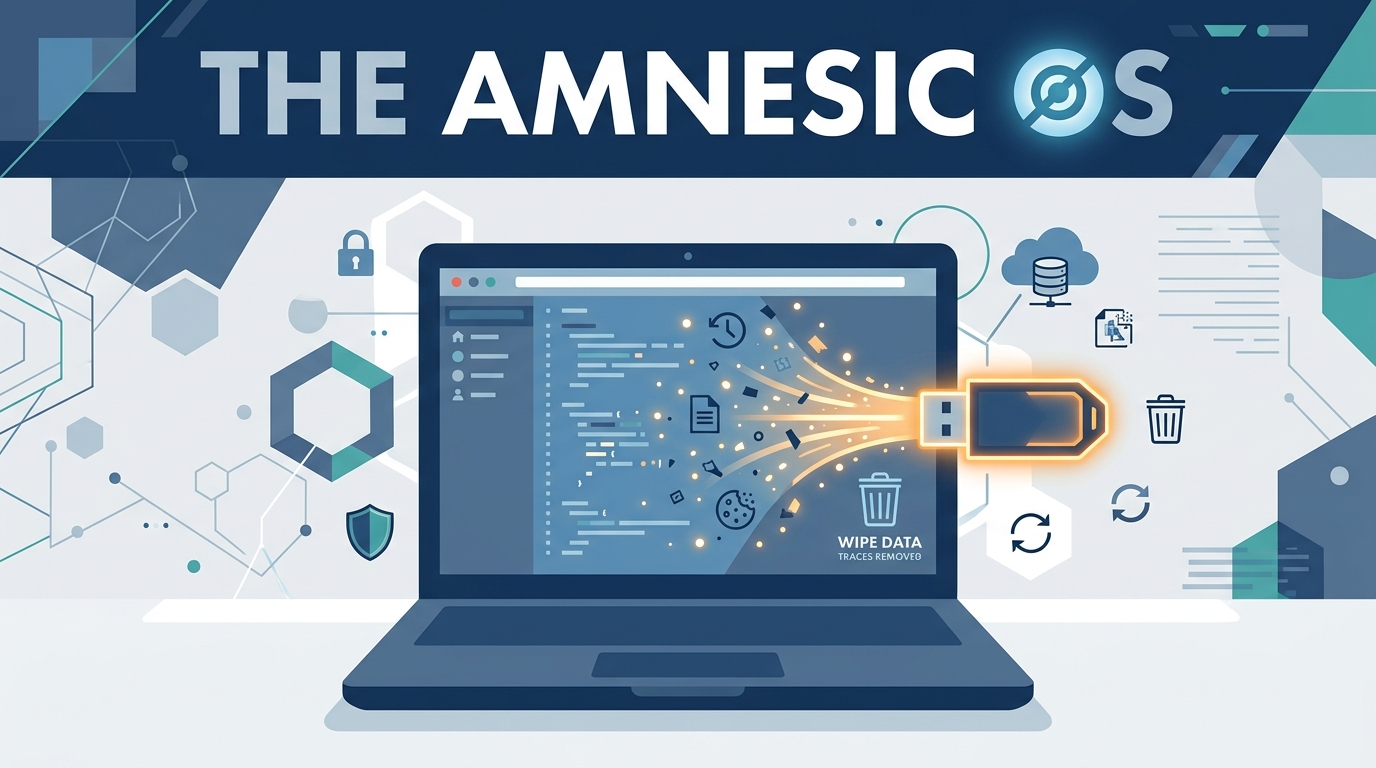
In 2013, Edward Snowden orchestrated the most significant intelligence leak in modern history. To safely communicate with journalists while evading the NSA—the most sophisticated surveillance apparatus on the planet—he did not rely on a standard MacBook or a Windows PC. He used a highly specialized tool called Tails. If an operating system is robust enough to protect a whistleblower against state-sponsored actors, it is the ultimate foundation for your personal digital sovereignty.
The Amnesic Advantage (RAM-Only Operations)
Tails stands for The Amnesic Incognito Live System. Its defining feature is that it is completely amnesic by design. When you boot a standard operating system, it constantly writes logs, cache files, and metadata to the hard drive. These digital footprints can be recovered by forensic experts months or even years later, even if you delete them.
Tails changes the paradigm. It is a “live” operating system that boots directly from a USB stick and runs entirely in your computer’s RAM (Random Access Memory). It strictly refuses to interact with the host computer’s internal hard drive. Because RAM requires continuous electrical power to hold data, the moment you shut down the computer and remove the USB stick, everything you did disappears instantly. There are no logs, no temporary files, and no forensic evidence. Your session simply ceases to exist.
Hermetic Anonymity (Forced Tor Routing)
Amnesia is only half the equation; the other half is absolute anonymity in transit. While many users install the Tor browser on their daily operating systems, this setup is vulnerable to IP leaks if an application bypasses the proxy settings.
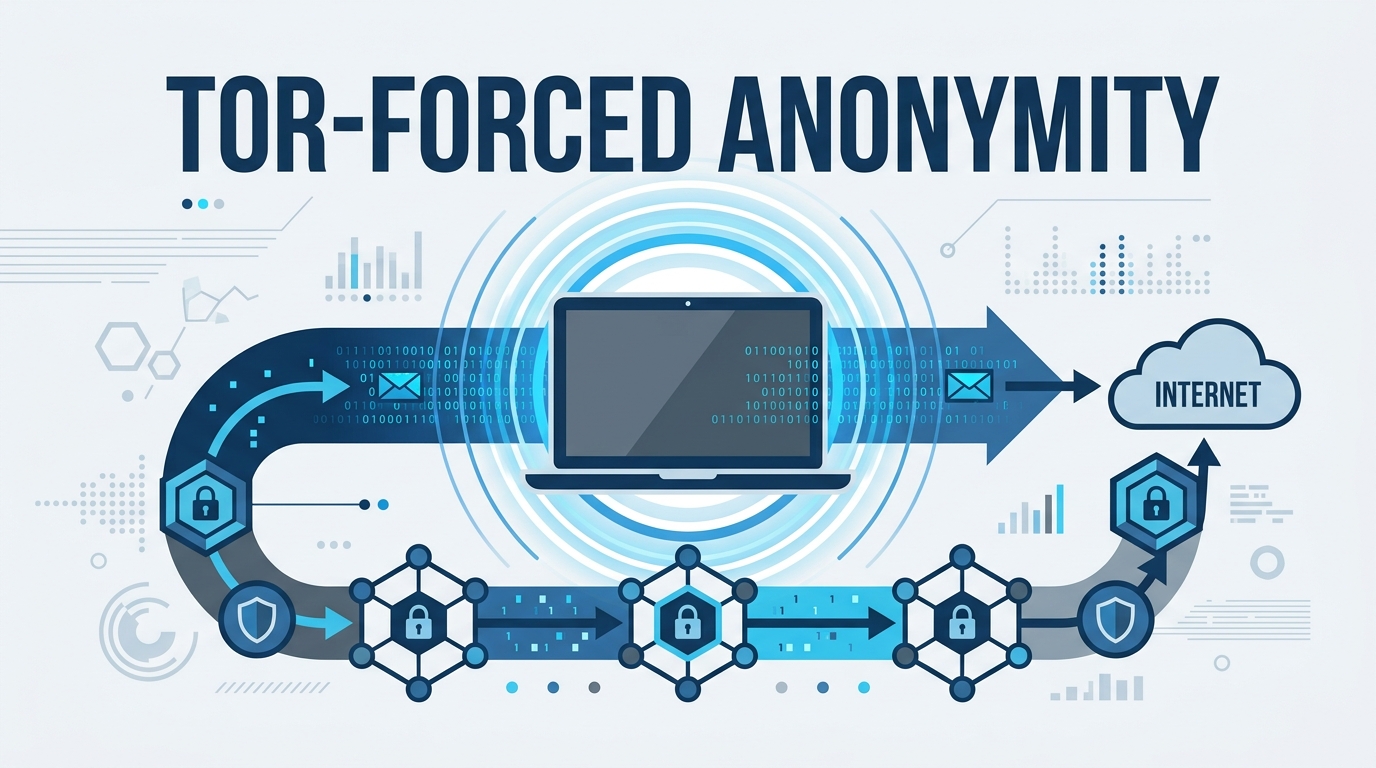
Tails eliminates this risk through weaponized networking. The operating system forces every single byte of outbound internet traffic through the Tor network. If an application tries to connect directly to the clear web, Tails blocks the connection at the kernel level. This hermetic seal ensures that your real IP address is never accidentally exposed, whether you are browsing the web, sending an encrypted email, or transferring cryptocurrency.
The Portable Burner Workspace
Beyond its core defenses, Tails is designed as a turnkey operational environment. It comes pre-loaded with a suite of cryptographic tools favored by privacy advocates and cypherpunks. Out of the box, you have access to GnuPG for encrypting files and emails, Electrum for managing Bitcoin securely, and OnionShare for anonymous file transfers.
Furthermore, it integrates natively with robust offline password vaults. As we established in our guide on Bitwarden vs KeePassXC: The Ultimate Password Managers for Privacy, managing your credentials in an air-gapped database is critical for OpSec. Tails includes KeePassXC by default, allowing you to access your encrypted vaults in a secure, amnesic environment without relying on cloud synchronization.
We explored the real-world implications of amnesic operating systems and extreme OpSec in our cyberpunk thriller. If you want to see how these exact tools are used by underground operatives to evade a global surveillance state, dive into the action with The Dawn of Resilience Trilogy.
Frequently Asked Questions (FAQ)
Can I save files permanently on a Tails OS USB drive?
By default, Tails forgets everything. However, you can configure an “Encrypted Persistent Storage” volume on the remaining space of your USB drive. This allows you to securely save documents, KeePass databases, and PGP keys that will persist across reboots, protected by AES encryption.
Does Tails OS work on Mac and PC?
Yes, Tails is built on Debian Linux and is designed to boot on almost any relatively modern computer, regardless of whether it normally runs Windows or macOS. You simply plug in the USB and hold the boot menu key during startup.
Is it illegal to use the Tor network?
In most democratic nations, using the Tor network is completely legal and is considered a fundamental tool for preserving privacy and freedom of speech. However, in heavily censored authoritarian regimes, using Tor may attract suspicion or be technically blocked by the ISP.
The Ghost in the Machine
In an era of ubiquitous surveillance, true freedom requires the ability to operate without leaving a material trace. Whether you are avoiding the threat of Bluetooth scanners in transit hubs or operating from a compromised device, Tails transforms any borrowed, public computer into a secure burner terminal. It is the digital equivalent of a ghost: it arrives silently, executes its mission, and vanishes without a footprint.
Ethan slipped the encrypted Tails USB drive into the compromised library terminal. He had exactly ten minutes to extract the tactical data. Because the amnesic OS ran entirely in RAM, he knew that the moment he pulled the drive from the port, the machine would forget he was ever there. To master these anti-forensic techniques and disappear from the surveillance grid, discover the complete arsenal in The Dawn of Resilience.

Next Level Cypherpunk Operations
While Tails OS provides exceptional local amnesia and Tor routing, mastering operational security requires a holistic approach. Explore these advanced setups to harden your entire perimeter:
- Network Shield: Why centralized biometric databases are a privacy trap
- Hardware Independence: The Urban SHTF Masterplan for grid-down survival
- Cognitive Defense: Running local, air-gapped AI to escape cloud surveillance