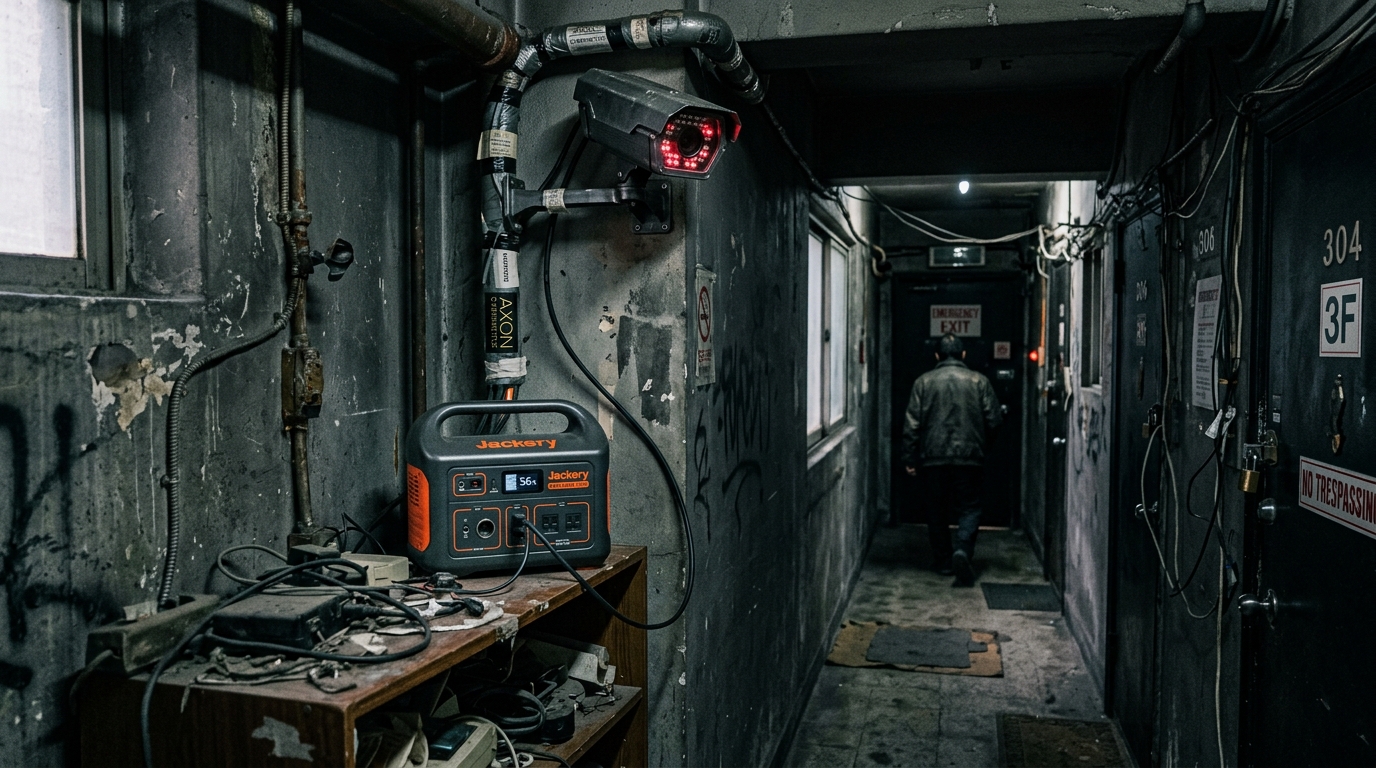
A power outage is the ultimate vulnerability. When the city goes dark, opportunistic crime often spikes.
For the urban prepper, a blackout is the exact moment when you need your perimeter security the most, and it should be integrated into a comprehensive apartment grid down survival masterplan. Unfortunately, most consumer surveillance systems are entirely dependent on the municipal grid.
When the lights go out, the cameras go blind.
If you want to maintain a hardened safehouse, you must know how to power security cameras without electricity. You cannot rely on the grid to protect your family or your supplies.
We are going to detail the strategies and hardware required to keep your electronic eyes wide open, ensuring you maintain absolute situational awareness even during a total grid collapse.
The Illusion of Wireless Security
Many modern homeowners rely on “wireless” Wi-Fi cameras (like Ring or Nest). While the data transmission is wireless, they still require power.
Some have internal batteries, but these are notoriously unreliable, often dying within hours—especially if they are triggered constantly by movement in a chaotic environment.
Furthermore, if your home Wi-Fi router loses power, those battery-operated cameras instantly become useless paperweights. They cannot transmit their footage or send you alerts.
To effectively power security cameras without electricity, you must address both the camera hardware and the networking infrastructure that supports it.
The Off-Grid Surveillance Hub
The foundation of a resilient security setup is a localized, independent power grid.
You need a centralized hub that can power your cameras, your network switch (if you use wired PoE cameras), and your Wi-Fi router simultaneously.
Power over Ethernet (PoE) Resilience
The most secure surveillance systems are hardwired using Power over Ethernet (PoE). A single cable provides both data and power to the camera.
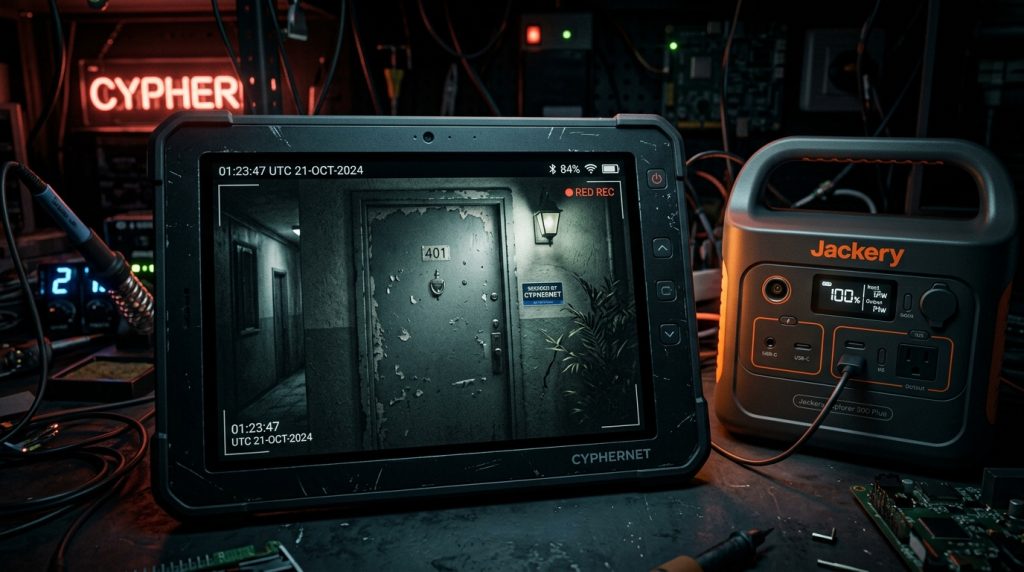
During a blackout, your goal is to keep the PoE switch or the Network Video Recorder (NVR) running.
This is where a portable solar power station becomes invaluable. By plugging your NVR or PoE switch directly into a high-capacity LiFePO4 generator, you instantly power security cameras without electricity from the grid.
Because cameras draw relatively low wattage (usually under 10W each), a mid-sized power station can keep a 4-camera PoE system recording locally for days.
[Insert Image 2 here]
Keeping Wi-Fi Cameras Alive
If you are locked into a Wi-Fi camera ecosystem, the strategy shifts.
You must first plug your home’s internet modem and Wi-Fi router into your portable power station.
If your Wi-Fi cameras are plugged into wall outlets, you will need to run them off smaller, localized battery banks, or route extension cords back to your central solar generator.
The key is realizing that powering the camera is only half the battle; the network must survive alongside it.
The Closed-Loop Solar Perimeter
A battery will eventually drain. For long-term grid-down scenarios, you must establish a closed-loop system.
By integrating foldable solar panels with your power station, you can harvest energy during the daylight hours.
You run the panels out on a balcony or a secure window, charging the battery core while the system continues to power your surveillance gear.
This setup guarantees that you can power security cameras without electricity indefinitely, maintaining a hardened perimeter and crucial OPSEC (Operational Security) while the rest of the city operates in the blind.
Don’t wait for the grid to drop to realize your security system is useless. Build an off-grid surveillance hub today.
Read our full Jackery Review: The Essential Power Station for Urban Survival
FAQ: Off-Grid Security Cameras
How can I power security cameras without electricity?
The most reliable way is to use a portable solar power station. You can plug your camera’s Network Video Recorder (NVR) or PoE switch directly into the generator, which will distribute power to all connected cameras simultaneously.
Will my Wi-Fi cameras work during a power outage?
Only if both the camera and your Wi-Fi router have backup power. If your router dies, the camera cannot transmit data. You must connect your router to a solar generator to maintain the network.
How much power do security cameras use?
Very little. A standard IP camera uses between 4 to 10 watts. A medium-capacity portable power station (around 1000Wh) can easily power a 4-camera system and a router for well over 24 hours.
The grid is fragile, but your mind doesn’t have to be. Hardware is only the first step. To truly survive the collapse of our physical and digital infrastructure, you need the right mindset.

Download Chapter 1 of The Dawn of Resilience for FREE and start your journey.