If you are reading this on an unencrypted connection, you need a zero trust vpn because you are already bleeding data. Every website you visit, every file you download, and every transaction you initiate is logged, categorized, and sold by your Internet Service Provider (ISP).
In the era of mass surveillance and algorithmic profiling, data is the new oil, and you are the well.
To build true digital sovereignty, securing your hardware with a crypto vault is only the first step. You must also secure your communication tunnel. You need to build an invisible network. Here is the operational blueprint for choosing and deploying a zero trust vpn to vanish from the digital panopticon.

The Illusion of “Incognito”
Most internet users believe that clearing their browser history or using “Incognito Mode” provides anonymity. This is a fatal misunderstanding of network architecture.
Incognito mode simply tells your local browser not to save your history on your physical device. However, your router, your ISP, and the servers of the websites you visit still see exactly who you are, where you are located, and what you are doing. Your DNS requests (the digital phonebook that connects you to websites) are transmitted in plain text.

When corporate technofascist systems (like the Palantir surveillance grids we analyzed previously) build their behavioral profiles, they don’t look at your computer screen; they buy the raw data logs from your ISP. If you do not encrypt your traffic at the source, you are operating in a glass house.
What Defines a zero trust vpn ?
A Virtual Private Network (VPN) creates an encrypted tunnel between your device and a secure server, hiding your IP address and turning your web traffic into unreadable ciphertext.
However, not all VPNs are created equal. Free VPNs on the app store are often data-harvesting malware in disguise. To be included in the Zero Trust Arsenal, a VPN must meet three non-negotiable criteria:
- 1- Strict No-Logs Policy: The provider must not keep any record of your bandwidth, timestamps, or IP addresses. If a government agency subpoenas the VPN company, there must be zero data on the servers to hand over.,
- 2- Offshore Jurisdiction: The company headquarters must be located outside the “Five Eyes” intelligence alliances (US, UK, Canada, Australia, New Zealand) to avoid secret mass-surveillance mandates.,
- 3- Hardware Kill Switch: If the VPN connection drops for even a microsecond, the software must instantly sever your internet connection to prevent your real IP address from leaking.
After extensive testing of the cybersecurity market, here are the only two providers we officially endorse for securing your perimeter.
The Cypherpunk Gold Standard: Mullvad VPN
If we are talking about pure, uncompromised ethics, Mullvad VPN is the industry benchmark. We make absolutely zero commission for recommending them—we include them in our Arsenal because they are the ultimate embodiment of the Zero Trust philosophy.
1- The Offshore Ghost: Hide.me VPN
If your threat model requires extreme privacy and independent verification, Hide.me VPN** is a top-tier evasion tool.
Based in Malaysia (a privacy-friendly jurisdiction completely outside the major intelligence-sharing alliances), Hide.me takes the Zero Trust philosophy to its limit. They are one of the few providers in the world to be independently audited by leading security analysts, proving definitively that their “No-Log” policy is mathematically guaranteed. They literally cannot store your data.
Furthermore, Hide.me supports advanced protocols like WireGuard and offers Stealth Guard features designed to bypass strict government firewalls and deep packet inspection. If you need to become a ghost in the machine, this is a powerful tool.
Vanish from the grid with Hide.me’s audited Zero Trust architecture.
2- The Cypherpunk Gold Standard: Mullvad VPN
If we are talking about pure, uncompromised ethics, Mullvad VPN is the industry benchmark. We make absolutely zero commission for recommending them—we include them in our Arsenal because they are the ultimate embodiment of the Zero Trust philosophy.
Mullvad does not ask for your name, your email, or any personal information. When you sign up, you simply generate a random 16-digit account number. To maintain absolute financial anonymity, you can pay for your subscription using Bitcoin, Monero, or even by mailing physical cash in an envelope to their headquarters in Sweden.
When law enforcement authorities recently raided Mullvad’s offices with a search warrant, they left empty-handed. Why? Because the servers are configured to run solely on RAM. There are no hard drives, and therefore, no data to seize. It is the ultimate cypherpunk shield.
Deploy Mullvad VPN and secure your traffic anonymously.
The Dawn of Digital Rebellion
Surviving the digital age requires you to act as your own intelligence agency. You must assume that every open connection is compromised. By routing your life through a zero trust VPN, you cut off the oxygen to the surveillance algorithms that track your every move.
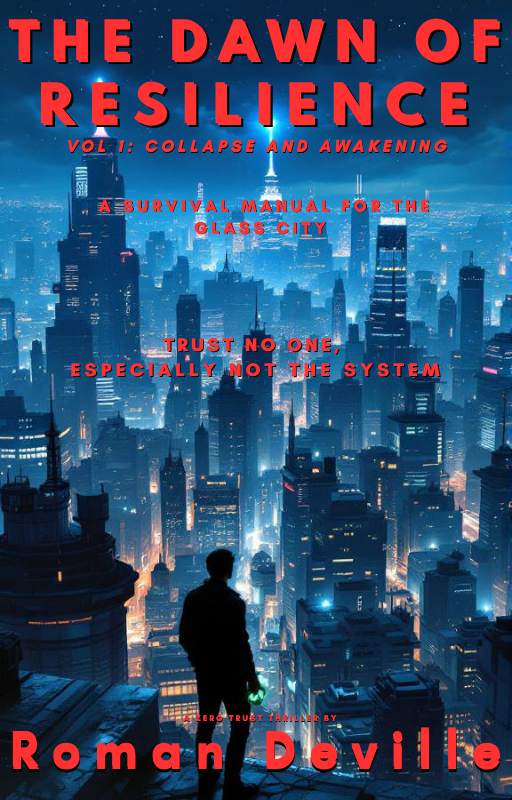
This exact philosophy of encrypted, untraceable communication is the only reason Ethan and Aura survive the manhunt in my cyberpunk thriller, The Dawn of Resilience. In their world, an unencrypted transmission is a death sentence. In our world, it is the surrender of your freedom.
Are you ready to disconnect from the panopticon?