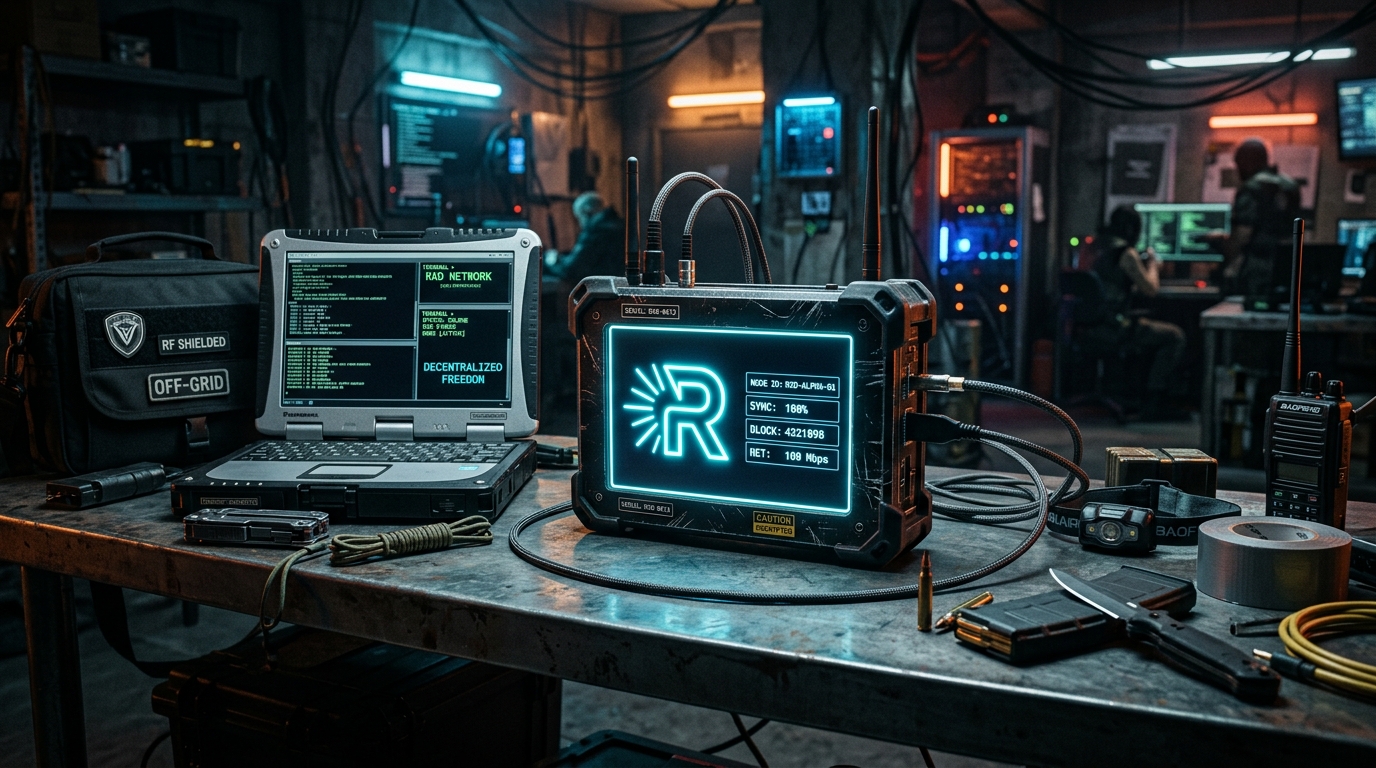
If you have read the first two articles of this series on the Wero rollout and its intellectual scam, the conclusion is clear. The traditional financial infrastructure, under the guise of superficial innovations, is meticulously building your digital prison. A centralized trap, saturated with KYC (Know Your Customer) standards, ready to host programmable money (CBDC) and the social control that comes with it.
The question is no longer whether the trap will snap shut, but when. Faced with this reality, the natural reaction is to look for an exit. But beware: you do not fight an absolute control system by using its own tools. The only viable response is technological secession. This is what we call the Cypherpunk alternative. And this is exactly where an architecture like Radiant (RXD) comes into play.
The Zero Trust Dogma
To understand Radiant’s value, you must first embrace the Zero Trust philosophy applied to finance. In the traditional banking system (and soon with the Digital Euro), every transaction requires the permission of a trusted third party: the bank, the payment processor, the State. This third party is the one validating, holding, censoring, or freezing your funds.
Zero Trust destroys this dynamic. The premise is binary: if anyone other than you holds the access keys to your money (which is why a hardware wallet is essential), it is not your money.
True financial sovereignty requires a pure peer-to-peer payment system. A network where value flows directly from point A to point B, without an intermediary, without authorization, and without any possibility of censorship. This was the original promise of Bitcoin, now undermined by network congestion and exorbitant fees that have turned it into a mere reserve asset. This is where Radiant takes up the torch of digital cash.
Why Radiant (RXD) is the Ultimate Debanking Weapon
Radiant is not yet another speculative cryptocurrency backed by nothing. It is a Proof of Work blockchain based on the UTXO model, exactly like the original Bitcoin, but with a fundamental difference: it is designed to be infinitely scalable and to support smart contracts on Layer 1.
What does this mean for you practically on a daily basis? * Instantaneity and negligible fees: Unlike congested systems, sending RXD costs a fraction of a cent and the transaction is validated almost instantly. It is the digital equivalent of handing a banknote directly to someone. No KYC, no account to freeze: You do not need to provide an ID card or a proof of address to open a Radiant wallet. You download a non-custodial wallet*, write down your 12 recovery words (your seed phrase), and you become your own bank. No one can freeze your account. * Uncensorable: The network is maintained by thousands of decentralized nodes. No government and no CEO can press a button to stop your transactions.
With Radiant, you get the exact same instant payment service as Wero claims to offer, but you completely invert the balance of power. You go from a surveilled tenant to a sovereign owner.
The Resistance Setup (The Ethan Method)
In the universe of my cypherpunk thriller The Dawn of Resilience, mastering these parallel flows is not an ideological luxury; it is a matter of survival. When the technostructure tracks every purchase and cuts off the financial lifeline of dissidents, the protagonist, Ethan, relies heavily on decentralized networks like Radiant.
His setup is ruthlessly effective: a non-custodial wallet stored on hardware wallets like Tangem (offline physical wallets) to secure the bulk of his capital, protected from electromagnetic pulses (EMP) inside military-grade Faraday bags (all these tools are curated in my Zero Trust Arsenal). For everyday use, he uses a mobile light client wallet, funded with just enough to transact under the radar. This is the principle of compartmentalization applied to finance, exactly as demonstrated by Ethan in The Dawn of Resilience.
FAQ: Radiant (RXD) and Financial Sovereignty
What makes Radiant (RXD) different from Bitcoin?
While Radiant shares the same foundational UTXO model and Proof-of-Work consensus as Bitcoin, it is designed for infinite scalability and layer-1 smart contracts. This allows for near-instant, sub-cent transactions without the congestion issues of BTC.
What is a non-custodial wallet?
A non-custodial wallet (like Tangem) means you hold the private keys to your assets. No bank, corporation, or government has access to your funds, and no third party can freeze or censor your transactions.
How do I protect my hardware wallet from physical threats?
Hardware wallets should be stored in military-grade Faraday bags to protect against electromagnetic pulses (EMP) and unauthorized RFID/NFC scanning. This physical isolation forms the core of the Zero Trust philosophy.
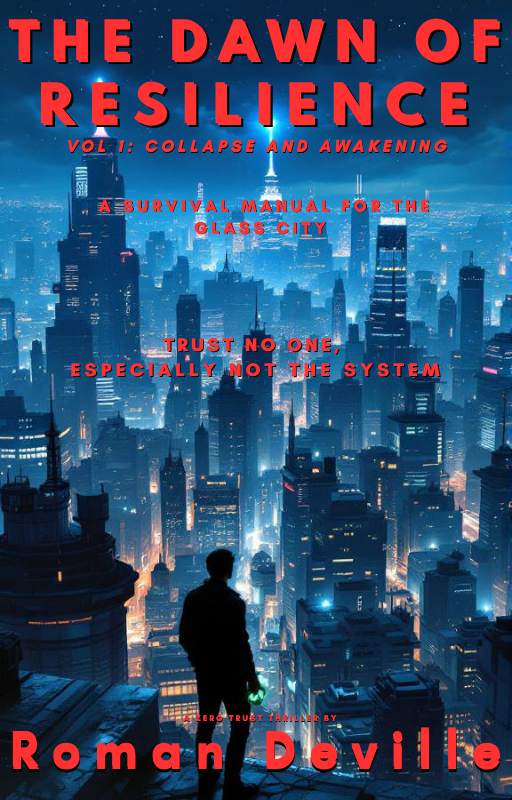
Get The Dawn of Resilience on Amazon
This fictional setup is entirely applicable today. In fact, it is the current urgency.
Starting to shift a portion of your wealth outside the banking system, learning how to secure a seed phrase, and understanding how a UTXO transaction works… These are no longer just skills for computer geeks. They are the basic financial survival skills of the 21st century.
The system is preparing a gilded cage for you with its institutional wallets. You have a choice: enter it obediently for a little “convenience”, or forge your own keys to step outside. The Cypherpunk alternative is here. It is up to you to use it. Don’t wait until it’s too late: gear up with the Zero Trust Arsenal and start reading The Dawn of Resilience to understand the stakes.